
You fall asleep fine, then it’s 3:07 a.m. and you’re wide awake. Again. After 40, sleep gets lighter, stress hits harder, alcohol lingers longer, and early meetings do not care. In 2026, screens, late caffeine culture, GLP-1 meds, and strength training recovery raise the stakes. These sleep hacks for men over 40 fix timing, cut wake-ups, optimize your room, and give you a 7-night reset.
Key Takeaways
- Set a non-negotiable wake time seven days a week to stabilize your body clock and rebuild sleep pressure.
- Get outdoor light within 60 minutes of waking to make sleep onset and melatonin timing more predictable at night.
- Cut caffeine 8 to 10 hours before bed and move hard training earlier if late workouts spike your system.
- Sleep colder, darker, and quieter than you think you need to prevent 2 to 4 a.m. wake-ups.
- Use a simple alcohol boundary (earlier, less, or not at all) to stop fragmented sleep.
Feel Strong, Focused, and Energized Again
Start your journey with simple, science‑backed steps designed specifically for men over 40. No fluff. No gimmicks. Just results.
No pressure. Just clear, practical guidance to help you move forward.
What You’ll Learn
- How to reset your sleep schedule without “sleeping in.”
- How to stop the 2 to 4 a.m. wake-up cycle (the most common complaint in men 40+).
- How to set up a testosterone-friendly sleep environment that keeps you asleep.
- Which supplements have the best evidence, and which are mostly hype.
- A repeatable 10-minute wind-down routine that works at home or on the road.
- A 7-night tracking method that shows you what is actually breaking your sleep.
The 40+ Sleep Problem: What’s Actually Changing (and what you can control)
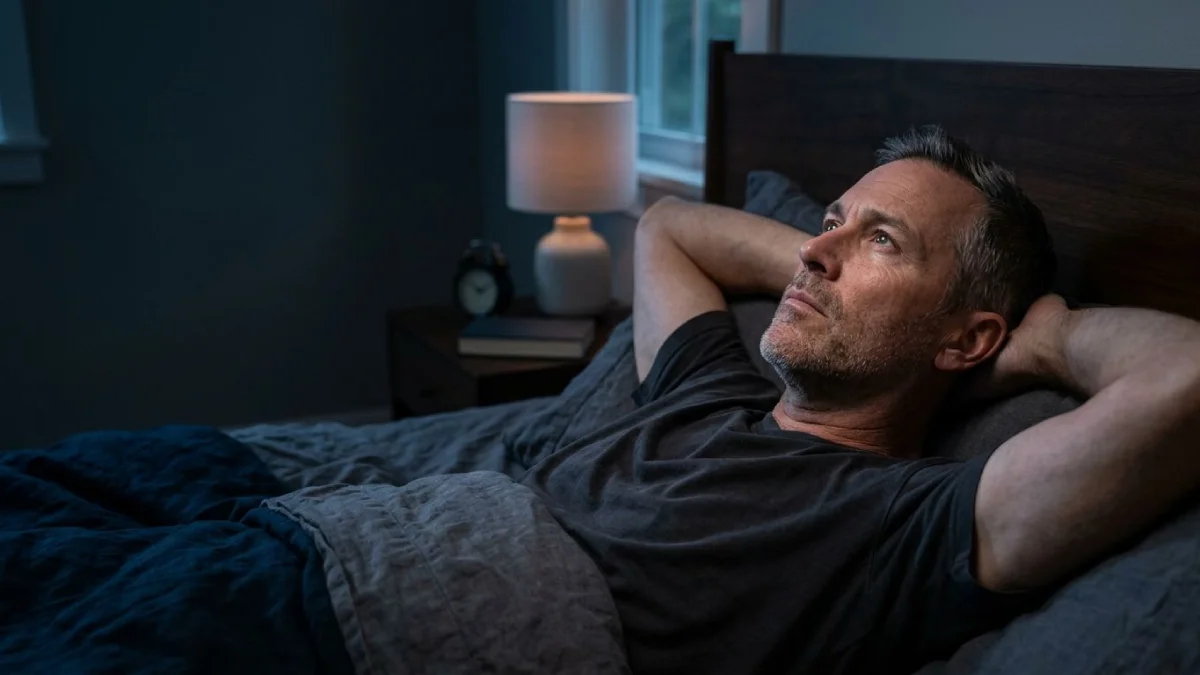
You are not broken. Your sleep system is adapting to new variables.
After 40, many men experience lighter sleep, more awakenings, and less deep sleep. Stress and evening light push your circadian rhythm later. Alcohol and medications can fragment sleep more than they used to. Add less daylight exposure and more screen time, and your system loses its anchor.
You cannot force sleep. You can engineer the conditions that make sleep inevitable.
Build everything around three pillars:
- Timing (circadian rhythm and wake time)
- Environment (temperature, light, noise)
- Physiology (stress, alcohol, food, breathing, apnea risk)
Why older men wake up at 2–4 a.m.
This is usually “sleep maintenance insomnia.” You fall asleep, then wake and struggle to return.
The common drivers are boring and predictable: stress load and cortisol, late alcohol, blood sugar swings, sleep apnea, overheating, and late caffeine. The fix starts with data, not vibes.
Run a simple 7-night audit. Track:
- Wake time and bedtime
- 2 to 4 a.m. wake-ups (yes/no, how long)
- Caffeine timing and total amount
- Alcohol timing and amount
- Dinner timing and late snacks
- Training time and intensity
- Screens in the last hour
Callout: If you snore loudly, gasp, have morning headaches, or feel sleepy during the day, get screened for sleep apnea. It is common in men 40+ and it destroys recovery.
Sleep and testosterone: the link most guys underestimate
Sleep is hormone hygiene. It is not optional if you want strength, libido, and resilience.
Testosterone follows a daily rhythm and is tightly linked to sleep quality and duration. When sleep is short or fragmented, testosterone can drop and training recovery gets blunted. This sleep deprivation also makes you hungrier, less patient, and less driven, which turns into worse choices the next day.
Compare two weeks of 5 to 6 hours versus 7 to 8 hours and you will feel it:
- More stable energy
- Better training drive
- Improved mood and libido
- Faster recovery and less soreness
You can lift hard, eat clean, and take every supplement on the internet. If your sleep is chaos, your results will be capped.
The ‘sleep pressure’ mistake: napping, sleeping in, and irregular wake times
Sleep pressure is your built-in “need for sleep.” It builds throughout the day and helps you stay asleep at night.
When you sleep in, take long naps, or bounce your wake time around, you drain sleep pressure at the wrong time. Your circadian clock also shifts later. Then bedtime arrives and you are tired but wired.
Use these rules:
- Same wake time, 7 days a week.
- Naps are optional, not required. If you nap, keep it 20 to 30 minutes and before 2 p.m.
- If you had a bad night, do not “fix it” by sleeping in. Fix it by rebuilding pressure the next day.
Sleep Hacks for Men Over 40: Fix Your Timing First (Circadian wins)

If you want the highest ROI, start here. Timing beats gadgets. Your circadian rhythm is the true key.
Your goal is simple: anchor your circadian rhythm so your body knows exactly when to feel alert and exactly when to shut down. You do that with wake time, morning light, and smarter caffeine and training timing.
Hack #1: Lock your wake time (even after a bad night)
Pick a wake time you can keep even on weekends. Make it realistic, not heroic.
Hold that line for 7 to 14 days and your bedtime will start to “pull” earlier naturally. If you slept poorly, get up anyway. Get light in your eyes. Avoid long naps. Build sleep pressure so the next night improves.
Example schedule for a working dad:
- Wake: 6:30 a.m.
- Outdoor light: by 7:15 a.m.
- Last caffeine: 1:30 to 2:00 p.m.
- Wind-down starts: 9:45 p.m.
- Lights out window: 10:30 to 11:15 p.m.
Consistency is the hack. The calendar is the coach.
Hack #2: Get 5–10 minutes of outdoor light within 60 minutes of waking
Morning light is a circadian sledgehammer. It tells your brain, “Start the day clock now.”
That anchors your rhythm, improves alertness, and makes sleep onset easier later because melatonin timing becomes more predictable. On cloudy days, stay out longer. Through a window is weaker. Outdoors wins.
Make it practical:
- Walk the dog.
- Drink coffee outside.
- Stand on the balcony.
- Park farther away and walk the last five minutes.
Add the matching move at night: dim lights 1 to 2 hours before bed. Reduce bright overhead LEDs. Use lamps. Lower the stimulus so your system downshifts on purpose.
Hack #3: Time caffeine and training like a pro (not like you’re 25)
After 40, caffeine has more bite and a longer tail for many men. Your sleep might look fine on paper, but caffeine can reduce deep sleep and increase awakenings.
Use a hard cutoff: 8 to 10 hours before bed. If you aim for 10 p.m. sleep, that is usually a 2 p.m. cutoff. If you are sensitive, move it earlier.
Training timing matters too:
- Earlier training often improves sleep because it builds sleep pressure and reduces stress.
- Late high-intensity sessions can delay sleep in some men by raising core temp and adrenaline.
If you train in the evening, keep it strength-focused and stop chasing PRs at 8:30 p.m. Also watch pre-workouts and total stimulant dose. For later sessions, prioritize hydration and electrolytes over stimulants.
Engineer a ‘Recovery Cave’: Environment hacks that actually move the needle
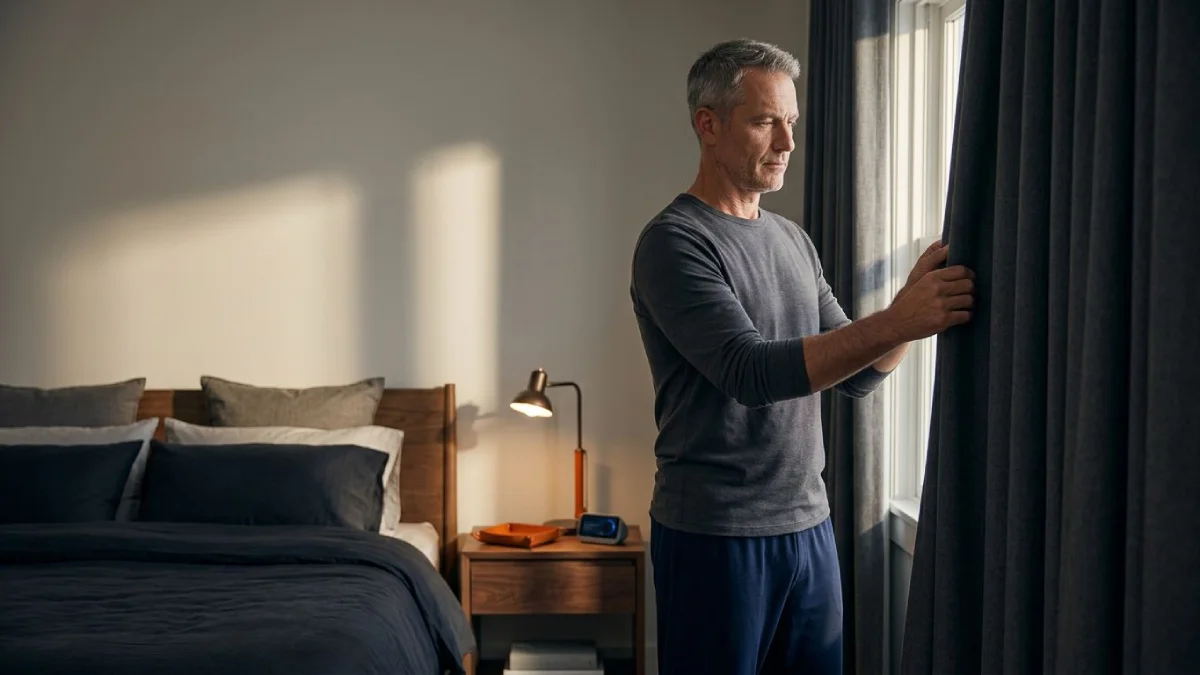
Older men often need stronger environmental control to stay asleep. Small disruptions become wake-ups.
Your bedroom isn’t décor, it’s a recovery tool. Treat it like one, and it stops being a room you sleep in and becomes a space that helps you stay asleep.
Hack #4: Drop the bedroom temperature (and cool your body fast)
To fall asleep and stay asleep, your core body temperature needs to drop. If your room is warm, you are fighting your biology.
A common effective range is 60–67°F (15–19°C), but comfort matters. Test and adjust. If you wake sweaty at 3 a.m., this is your first fix.
Use simple tactics:
- Fan plus breathable bedding
- Lighter duvet and moisture-wicking sheets
- A cooler shower 1 to 2 hours before bed if you run hot
- Keep the room cool, not just the hallway
Cold room, stable sleep. That is the trade.
Hack #5: Make it darker and quieter than you think you need
Light and noise cause micro-awakenings you may not remember. After 40, those micro-awakenings often become full wake-ups.
Go all in:
- Blackout curtains or a quality sleep mask
- Cover LEDs (chargers, alarm clocks, TV standby lights)
- Phone out of reach, ideally out of the room
- White noise or earplugs if your environment is inconsistent
- Address partner snoring directly, not passively
If you wake at night, do not check the time. Time-checking turns one wake-up into an anxiety loop.
Hack #6: Re-condition your brain: bed is for sleep (and sex)
If you scroll, email, watch news, or argue in bed, your brain learns that the bed is an alertness zone. Then you wonder why you cannot stay asleep.
Keep the bed “clean”:
- No email, news, or doom scrolling in bed
- Set a charging station outside the bedroom
- Read paper or a low-stimulation device outside the bed if you need to unwind
If you are awake for more than about 20 minutes, do stimulus control:
- Get up
- Keep lights dim
- Do something boring (easy reading, calm breathing)
- Return only when sleepy
This is not punishment. It is retraining.
Physiology & Routine: Stop the 3 a.m. wake-up with simple adjustments

Most 2 to 4 a.m. wake-ups come from a predictable stack: stress, alcohol, food timing, overheating, and apnea risk. You do not need perfection. You need repeatable routines.
Hack #7: Build a 10-minute wind-down that lowers arousal (not ‘perfect’ meditation)
You’re not aiming for monk-level stillness; you’re simply lowering arousal enough for sleep to take over.
Use this 10-minute sequence:
- 2 minutes nasal breathing with longer exhales (exhale is the brake)
- 5 minutes light mobility (hips, thoracic spine, hamstrings, neck)
- 3 minutes journaling: brain dump plus tomorrow’s top 3 priorities
This reduces cognitive load and sympathetic activation. It also stops the “I forgot something” loop that wakes you at 3 a.m.
Travel version:
- 2 minutes breathing
- Hot shower
- 10 pages of a boring book
Repeat it. The repetition is the power.
This is the Revivo40 way: simple, repeatable, and built for real life.
Hack #8: Alcohol rule for men 40+: earlier, less, or not at all
Alcohol isn’t a harmless nightcap – it’s a sleep thief dressed up as relaxation.
It can make you drowsy, then it fragments sleep later in the night. It also worsens snoring and can aggravate sleep apnea. After 40, the rebound is stronger, and the 2 to 4 a.m. wake-up becomes common.
Pick a boundary you can keep. Here’s an easy one:
- 2-2-2 rule: 2 drinks max, 2 hours before bed, 2 nights per week
If you drink anyway:
- Stop earlier
- Hydrate and consider electrolytes
- Avoid sugary mixers
- Expect lighter sleep and plan accordingly
Want predictable sleep? Alcohol has to earn its place.
Hack #9: Dinner timing + protein/carbs to stay asleep
Late heavy meals can worsen reflux and raise body temperature. But under-eating can also backfire by triggering hunger or blood sugar drops at night.
Use practical targets:
- Finish dinner 2 to 3 hours before bed
- Include protein + fiber for stable overnight energy
- Add a small carb portion if it reliably helps you fall asleep (test, do not guess)
If you wake hungry at 3 a.m., run a 7-night experiment:
- Try a small protein-forward snack 60 to 90 minutes pre-bed, like Greek yogurt or cottage cheese.
- Track whether wake-ups decrease.
Your goal is stable blood sugar and a calm gut, not a perfect macro spreadsheet.
Feel Strong, Focused, and Energized Again
Start your journey with simple, science‑backed steps designed specifically for men over 40. No fluff. No gimmicks. Just results.
No pressure. Just clear, practical guidance to help you move forward.
Expert Notes
- Sleep duration and insomnia tools: The American Academy of Sleep Medicine supports behavioral strategies like stimulus control for insomnia and generally recommends adults aim for 7+ hours of sleep on a regular basis.
- Morning light and circadian timing: Sleep medicine consensus supports morning light exposure as a primary method to entrain circadian rhythm by influencing melatonin timing and alertness signals.
- Alcohol and sleep architecture: Reviews consistently show alcohol tends to suppress REM early and increase fragmentation later in the night, which is why it often causes 2 to 4 a.m. wake-ups.
Bottom Line Summary
The best sleep hacks for men over 40 are boring, powerful, and repeatable: lock your wake time, get morning light, set caffeine and alcohol boundaries, and sleep in a cool, dark, quiet room. Add a 10-minute wind-down to lower arousal and reduce 3 a.m. wake-ups. Run a 7-night experiment and track three metrics: sleep onset time, number of awakenings, and morning energy. Sleep is the foundation of strength, hormones, and long-term resilience, the Revivo40 way is consistency over complexity.
FAQs (Frequently Asked Questions)
Why do men over 40 often wake up between 2 to 4 a.m. and struggle to fall back asleep?
Men over 40 commonly experience ‘sleep maintenance insomnia,’ where they wake between 2 to 4 a.m. due to factors like increased stress and cortisol levels, late alcohol consumption, blood sugar fluctuations, sleep apnea, overheating during sleep, and late caffeine intake. These disrupt the ability to stay asleep and cause fragmented sleep.
How can setting a consistent wake time improve sleep quality for men over 40?
Setting a non-negotiable wake time every day, including weekends, helps stabilize the body’s circadian rhythm and rebuilds sleep pressure. This consistency makes bedtime come earlier naturally and reduces nighttime awakenings by aligning your internal clock with daily light exposure and activity patterns.
What role does morning outdoor light play in improving sleep for men over 40?
Getting outdoor light within 60 minutes of waking helps anchor your circadian rhythm by regulating melatonin production and signaling your body when to feel alert during the day and sleepy at night. This natural light exposure makes sleep onset more predictable and reduces early morning awakenings.
Why is managing caffeine and alcohol timing important for better sleep after 40?
Caffeine consumed less than 8 to 10 hours before bed can spike your system and delay sleep onset or cause nighttime awakenings. Similarly, late or excessive alcohol fragments sleep by disrupting normal sleep cycles. Cutting caffeine early in the day and limiting or moving alcohol consumption earlier prevents these disturbances.
How does sleep quality affect testosterone levels and overall health in men over 40?
Sleep is crucial for hormone hygiene; testosterone follows a daily rhythm linked closely to sleep duration and quality. Poor or fragmented sleep lowers testosterone, impairing strength, libido, mood stability, training recovery, energy levels, patience, and decision-making—ultimately capping fitness and health results.
What environmental changes can help men over 40 prevent waking up in the middle of the night?
Creating a sleep environment that is colder, darker, and quieter than you might think necessary helps prevent early morning awakenings. Optimizing bedroom temperature, minimizing light exposure (including screens), and reducing noise contribute to deeper, uninterrupted sleep essential for recovery after 40.
About Terry
Founder of Revivo40
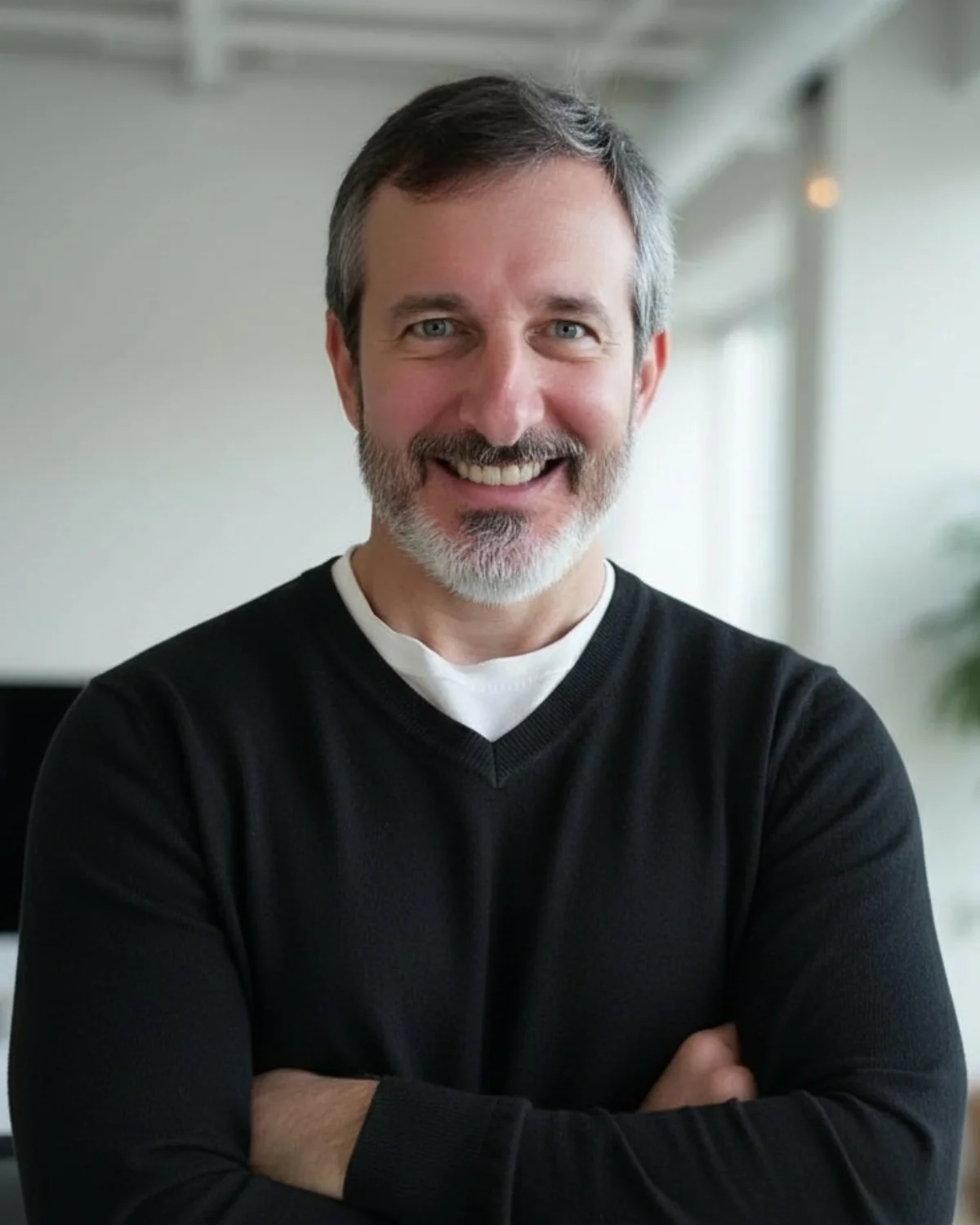
Terry is the founder of Revivo40, a performance brand built for men who want their strength, energy, and confidence back. After hitting his own wall in his 40s, he spent years rebuilding his health through strength training, hormone literacy, and simple, sustainable routines.
Today, he blends real‑world experience with evidence‑informed guidance to help men cut through the noise, take back control of their bodies, and step into their second peak with clarity and confidence. His mission is simple: help men over 40 reclaim their edge and build a stronger, sharper, more energized second half of life.
If you’re ready to rebuild your strength and energy, join the Revivo40 Newsletter for weekly, no‑BS guidance built for men over 40.