
You used to feel strong. Now your back feels tight, your shoulders complain, your energy dips by mid-afternoon, and the belly hangs around even when you “try.” This guide to beginner strength training for men over 40 offers a joint-friendly 3-day plan, a safe exercise list, progression rules, recovery targets, and the mistakes that quietly stall results.
Key Takeaways
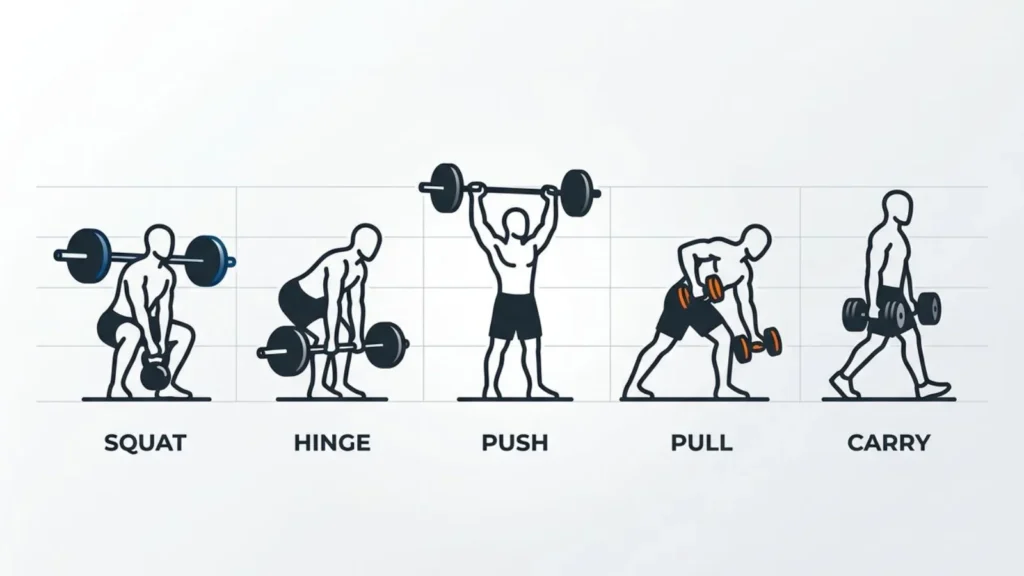
- Train 2–3x/week full-body using the big patterns: squat, hinge, push, pull, carry.
- Start submaximal and leave 2–3 reps in reserve so joints stay calm and consistency wins.
- Progress with simple rules: add reps → add load → add sets, not random PR attempts.
- Recovery is training: hit protein, sleep, steps, and a few mobility staples to keep momentum.
- If pain shows up, swap variations (trap-bar deadlift, goblet squat, incline push-up) and keep moving forward.
What You’ll Learn
- How to choose safe, effective exercises even if you haven’t lifted in years
- A simple 12-week structure (frequency, sets, reps, intensity) you can actually follow
- A repeatable warm-up and mobility “minimum” that reduces aches and improves output
- How to tell normal soreness from a warning sign so you don’t guess
- How strength training supports energy and hormones indirectly through better sleep, body composition, and stress control (no hype)

Why strength training changes after 40 (and why that’s good news)
You can build real strength at 40, 50, and 60. But you must respect recovery and joint tolerance. That is not weakness. That is strategy.
Revivo40’s standard is simple: clarity, consistency, integrity. No ego lifting. No chaos. Just training that compounds.
The real goal: resilience, not “ego lifting”

If you measure success by the biggest number you lifted once, you will eventually get punished. If you measure success by how your body performs every week, you keep winning.
Track these outcomes instead:
- Stronger reps with clean form
- Better posture and bracing
- Less nagging pain
- More stable energy and mood
- Strength that shows up in real life: carrying, climbing, lifting, moving
Here’s the key: minimum effective dose beats maximum tolerated dose for most men over 40.
A practical example: a 45-year-old desk worker who lifts full-body 3x/week and walks most days will typically outperform the same guy doing a 6-day “bro split” that wrecks his shoulders, sleep, and schedule. You do not need more days. You need better days.
What to expect in the first 4 weeks

Weeks 1–2 are about skill and soreness control. You are learning positions, bracing, and tempo again. Keep intensity moderate, around RPE 6–7 (you could do 3–4 more reps if you had to, but you stop early).
Weeks 3–4 usually bring noticeable strength jumps. That is often neural adaptation, meaning your body is getting better at coordinating effort. Stay strict with form. Do not get greedy.
Expectations that keep you consistent:
- DOMS (muscle soreness) can happen, especially early
- Sharp joint pain is not “part of it”
- Consistency target: 8–12 sessions in month one is a win
If you hit that target, you are already ahead of most men.
The 3 risks men over 40 must manage
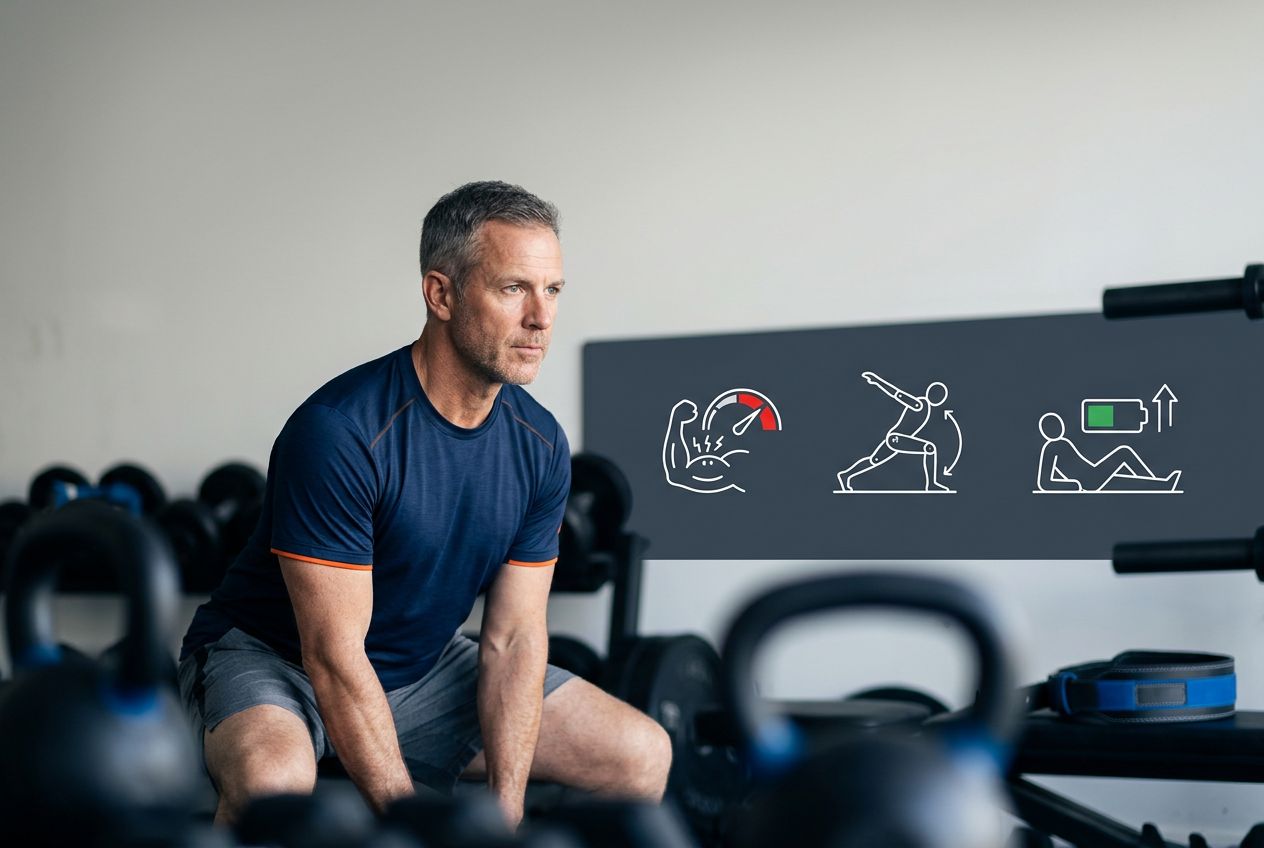
Risk 1: Doing too much too soon.
Your enthusiasm spikes, you add too many sets, chase failure, and your elbows, knees, and low back pay the bill.
Quick fix: cap volume early. Start with 2 working sets per movement in week 1 and earn the right to do more.
Risk 2: Staying stiff and skipping warm-up and mobility.
Tight hips, limited ankles, and a locked-up upper back turn basic lifts into joint irritation.
Quick fix: keep a short warm-up you repeat every session. Five to eight minutes is enough when it is targeted.
Risk 3: “Mystery fatigue” from poor recovery inputs.
If sleep is short, protein is low, and steps are minimal, you feel older than you are.
Quick fix: set recovery targets you can execute. Aim for a protein baseline, a sleep window, and daily walking. Make recovery measurable.
Feel Strong, Focused, and Energized Again
Start your journey with simple, science‑backed steps designed specifically for men over 40. No fluff. No gimmicks. Just results.
No pressure. Just clear, practical guidance to help you move forward.
Your pre-lifting checklist (so you don’t get hurt or quit)
Take 10 minutes before you start this program. You are not testing your toughness. You are choosing the right entry point.
If you have cardiac symptoms, uncontrolled blood pressure, recent surgery, or your physician has flagged exercise risk, get medical clearance first. That is responsibility, not fear.
Pain vs. soreness: the simple rule

You need a clean definition because guessing causes injuries and quit cycles.
Soreness usually feels like:
- a dull muscle ache 24–48 hours after training
- tenderness that improves as you warm up and move
Pain usually feels like:
- sharp, stabbing, catching, or radiating sensations
- worsening every set or every rep
- joint pain that changes your mechanics
When pain shows up, use this modification ladder:
- Reduce range of motion
- Reduce load
- Swap the variation but keep the pattern
Example: shoulder pinch on bench press. Don’t push through it. Switch to a neutral-grip dumbbell press, incline push-up, or push-up handles and keep training your push pattern without the irritation.
For more tailored advice on managing these risks and optimizing your fitness journey after 40, consider exploring resources such as Revivo40, which offers valuable insights into health and fitness for men over 40.
Warm-up that actually works (5–8 minutes)
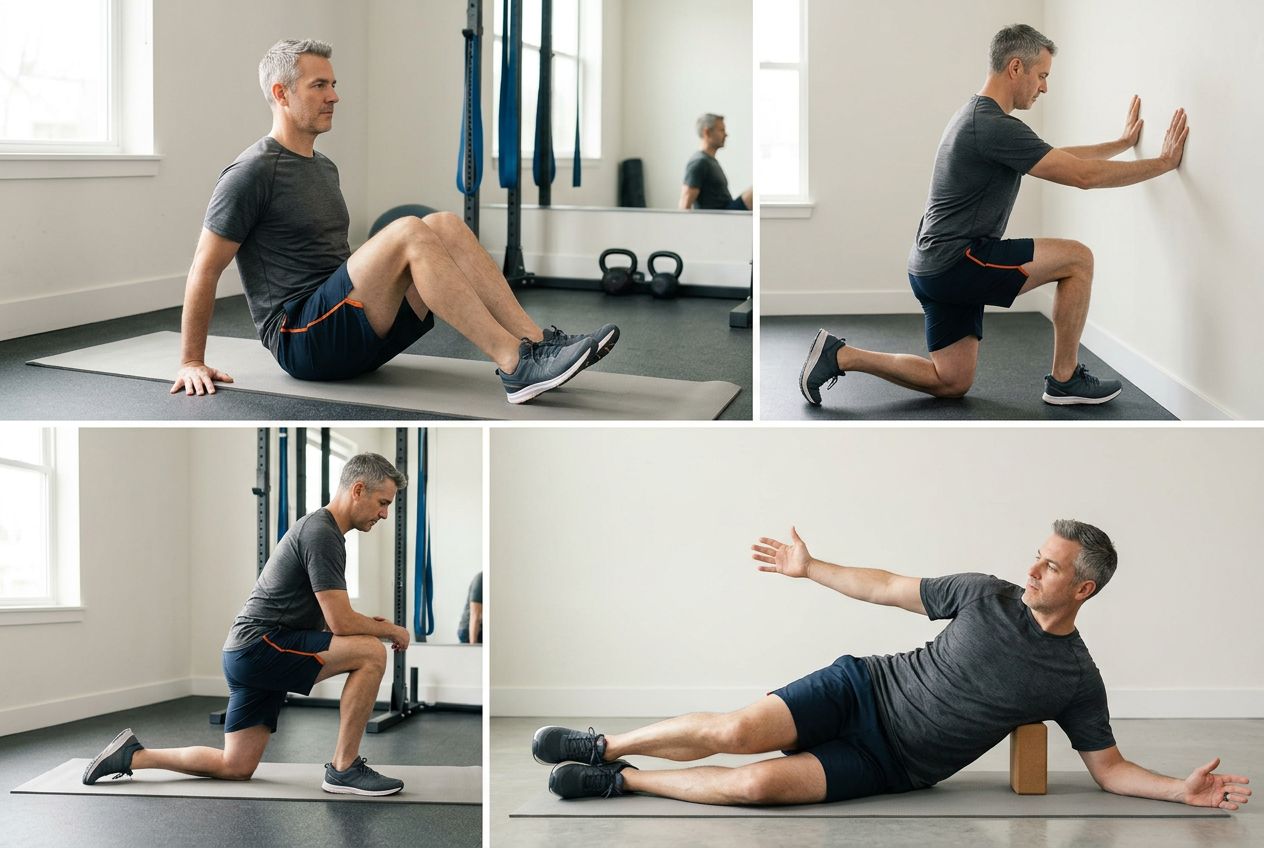
You do not need a 20-minute warm-up. You need a repeatable one.
Use this structure:
- 2 minutes raise temperature: brisk walk, bike, or row
- 2 ramp-up sets for your first main lift with lighter weight
Mobility drills (pick one per area)
- Hips: 90/90 switches
- Ankles: knee-to-wall rocks
- Thoracic spine: open-book rotations
Your goal is simple: feel warmer, move better, and hit your first working set without stiffness.
Choose the right starting weights (no guessing)
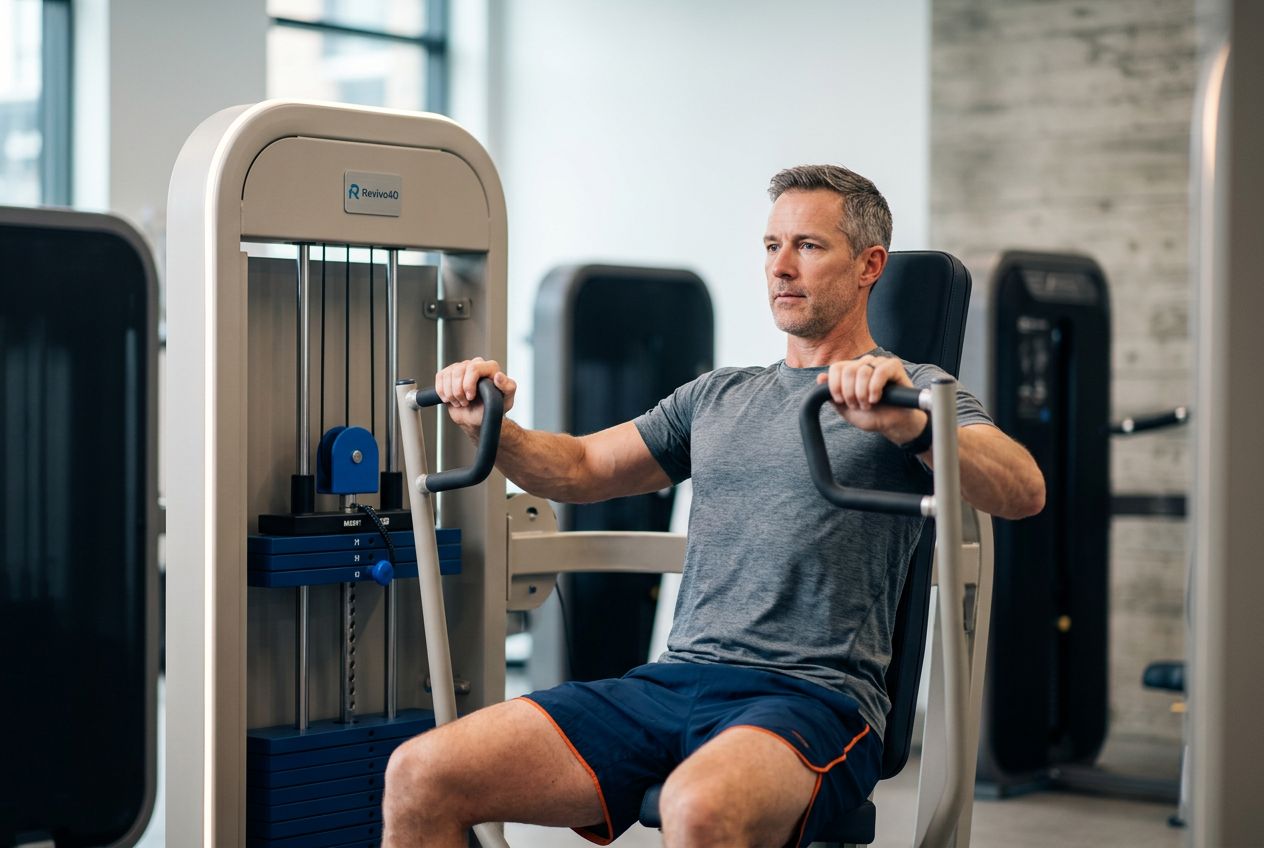
You will use a rule that protects joints and builds confidence fast.
- Pick a weight you could do for 2–3 more reps with clean form
- Start week 1 with 2 working sets per lift
- If form breaks, the weight is too heavy even if you can grind it
- Track the basics in a notes app: exercise, weight, reps, and RPE (or reps-in-reserve)
This is how you stop overthinking. This is how you build momentum.
The 3-day beginner strength plan (men 40+)
This is built for busy schedules and real recovery needs. Three full-body days give you high frequency practice without smashing you with volume.
Each session hits five movement patterns: squat, hinge, push, pull, and carry or core.
Options are included for gym vs home and common limitations (knees, low back, shoulders). Use the substitutions and keep the training week intact.
Day A (Full-Body) — squat focus

1) Main lift: Goblet squat or leg press
- 2–3 sets x 6–10 reps
- Technique cues: full foot on the floor, knees track over toes, exhale and brace as you stand.
Substitutions if knees complain: box squat to a comfortable depth, or leg press with controlled range.
2) Hinge: Romanian deadlift (DB or BB)
- 2–3 sets x 6–10 reps
- Cues: soft knees, hips back, long spine, feel hamstrings, stop before your low back takes over.
Low back sensitive? Use dumbbells and shorten range until control improves.
3) Pull: Chest-supported row or cable row
- 2–3 sets x 8–12 reps
- Cues: pull elbows toward hips, pause briefly, avoid shrugging.
4) Carry/core: Farmer carry or suitcase carry
- 3 rounds x 30–60 seconds
- Cues: tall posture, ribs down, steady steps, do not lean.
Rest guidance
- Main lifts: 90–150 seconds
- Accessories/carries: 60–90 seconds
Day B (Full-Body) — hinge + back focus

1) Main lift: Trap-bar deadlift (preferred) or rack pull
- 2–4 sets x 3–6 reps (technique first)
- Cues: brace hard, push the floor away, keep reps crisp.
Why trap bar? Many men tolerate it better than a straight bar because it reduces shear stress and keeps positioning simpler.
2) Single-leg: Split squat or step-up
- 2–3 sets x 6–10 reps per side
- Cues: steady tempo, front foot planted, knee tracks clean.
Knee irritation? Use step-ups to a lower box and keep shin more vertical.
3) Pull: Lat pulldown or assisted pull-up
- 2–3 sets x 6–12 reps
- Cues: pull to upper chest, keep ribs down, control the return.
4) Core: Pallof press or dead bug
- 2–3 sets
- Cues: slow, controlled, breathe, keep low back from arching.
Key rule today
Stop sets before form degrades. Protect your low back by bracing and keeping reps clean.
Day C (Full-Body) — push + athletic carry focus

1) Main lift: Front squat (light) or box squat
- 2–3 sets x 5–8 reps
- Cues: tall torso, controlled depth, no collapsing.
If your shoulders/wrists hate the front squat, consider using a goblet squat again. Remember, repeating a safe pattern is not failure; it is mastery. For more tips on mastering the front squat, you can refer to this resource.
2) Hinge: Hip thrust or glute bridge
- 2–3 sets x 8–12 reps
- Cues: ribs down, squeeze glutes at the top, no over-arching.
3) Pull: One-arm dumbbell row
- 2–3 sets x 8–12 reps per side
- Cues: stable torso, pull with your back, do not twist.
4) Conditioning finisher (optional)
- Sled push or incline walk: 8–12 minutes in zone 2
- Rule: Finish with control, not collapse.
5) Carry: Overhead carry or farmer carry
- 2–3 rounds
- Cues: stacked ribs and pelvis, slow steps, stable shoulder.
If your shoulder doesn’t love overhead carries, remember that using farmer carries is just as effective. Carry is carry.
How to progress (12-week framework you can’t mess up)
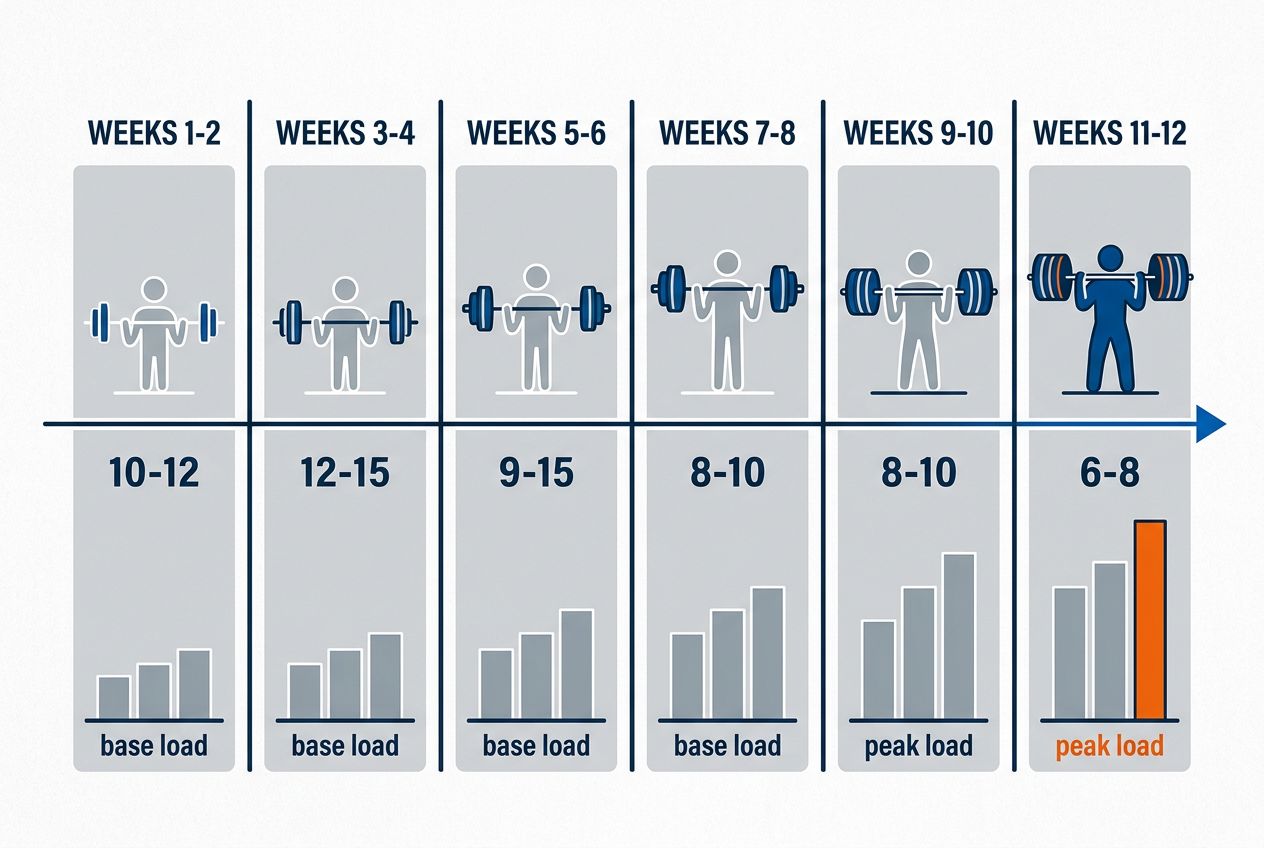
Your job is not to “go hard.” Your job is to stack clean reps week after week.
Use these progression rules:
- Add reps within the range first
- When you hit the top of the range on all sets, add a small load (2.5–5 lb)
- Only then consider adding sets
- If a week feels off, repeat the same numbers and win with better form
Weeks 1–4: groove technique + build the habit
- Train 2–3 days/week
- Start with 2 working sets per lift in week 1
- Most lifts sit in 6–12 reps
- Leave 2–3 reps in reserve on every set
Progression example (simple and effective):
- Week 1: 2 x 6
- Week 2: 2 x 7
- Week 3: 2 x 8
- Week 4: 2 x 9–10
- Then add a small load and go back to the bottom of the rep range.
Miss reps? Do not jump around. Keep the same weight next week and earn it.
Weeks 5–8: add a set (not intensity)
Now you build more work capacity without joint flare-ups.
- Move key lifts to 3 working sets
- Keep RPE controlled
- If joints feel good, keep one main lift slightly heavier in the 3–6 rep range (like trap-bar deadlift)
Add a planned easier week every 4th week:
- Reduce sets by 30–40%
- Keep the same exercises
- Stop well short of failure
De-load weeks are not “lost time.” They are how you keep progress sustainable.
Weeks 9–12: tighten performance + small upgrades
Only now do you earn complexity.
Options that work without chaos:
- Tempo reps (3 seconds down)
- Pauses in the safest position (like a brief pause at the bottom of a goblet squat)
- One extra accessory for a weak point (upper back, glutes, hamstrings)
Retest by performance, not maxes:
- Same weight for more reps
- Same reps with better form and lower RPE
- Same training week with less soreness and better recovery
If recovery is poor, do not force intensity. Hold steady and fix the inputs: sleep, protein, steps.
Expert Notes / Evidence Callouts
- Resistance training works at midlife and beyond. Position stands and reviews consistently show improvements in strength and lean mass in middle-aged and older adults when training is progressive and consistent. (ACSM resistance training guidance, 2009; updates and summaries reaffirm similar principles.)
- Protein supports muscle retention and growth. A practical evidence-based target for active people is often around 1.6 g/kg/day (with a wider effective range depending on goals and body size). (ISSN Position Stand on Protein and Exercise, 2017)
- Sleep impacts performance and hormones. Research links sleep restriction with worse recovery, appetite regulation, and hormonal environment, which can blunt training progress. You do not “biohack” your way around chronic short sleep. (Consensus findings across sleep and endocrine literature; see Leproult & Van Cauter, 2011, for testosterone effects of sleep restriction.)
No hype. Just levers you control.
Bottom Line Summary

Beginner strength training for men over 40 should be simple, joint-friendly, and consistent. Run three full-body days. Control intensity. Progress with reps, then load, then sets. De-load on purpose. Nail the recovery basics: protein, sleep, walking, and a short mobility warm-up.
You do not need more motivation. You need a system you repeat. If you want the step-by-step onboarding version with tracking and form standards, start here: [Strength Starter Blueprint for Men 40+].
Energy levels naturally decline after 40, so it’s important to address them directly. Implementing some of these 5 fixes that actually work can make a significant difference. Also consider incorporating these 3 energy tips into your routine for better results.
Prioritize recovery to ensure long-term success in your fitness journey. For more insights on this topic, explore our comprehensive Recovery & Longevity System.
Feel Strong, Focused, and Energized Again
Start your journey with simple, science‑backed steps designed specifically for men over 40. No fluff. No gimmicks. Just results.
No pressure. Just clear, practical guidance to help you move forward.
FAQs (Frequently Asked Questions)
What is the recommended frequency and focus for strength training for men over 40?
Men over 40 should train full-body 2–3 times per week, focusing on big movement patterns like squat, hinge, push, pull, and carry to build strength safely and effectively.
How should men over 40 approach progression in their strength training?
Progression should follow simple rules: first add reps, then add load, and finally add sets. Avoid random personal record attempts to protect joints and ensure consistent progress.
What are key recovery targets to support strength training after 40?
Recovery is crucial and includes hitting protein intake goals, ensuring quality sleep, maintaining daily steps, and incorporating mobility exercises to reduce aches and sustain momentum.
How can I differentiate between normal muscle soreness and pain during training?
Normal soreness feels like a dull ache or tenderness improving with movement 24–48 hours post-training. Pain is sharp, stabbing, worsens with each set or rep, or causes joint discomfort altering mechanics — if pain occurs, modify your exercises accordingly.
What common mistakes should men over 40 avoid when starting strength training?
Avoid doing too much too soon by capping volume early; skipping warm-up and mobility routines that prevent stiffness; and neglecting recovery factors like sleep, protein intake, and daily activity which can cause fatigue and injury risk.
Why is strength training different after age 40 and how does this impact training strategy?
After 40, recovery time increases and joints require more care. This necessitates a strategic approach emphasizing clarity, consistency, integrity, submaximal efforts with reps in reserve, and avoiding ego lifting to build real resilience rather than chasing max lifts.
About Terry
Founder of Revivo40

Terry is the founder of Revivo40, a performance brand built for men who want their strength, energy, and confidence back. After hitting his own wall in his 40s, he spent years rebuilding his health through strength training, hormone literacy, and simple, sustainable routines.
Today, he blends real‑world experience with evidence‑informed guidance to help men cut through the noise, take back control of their bodies, and step into their second peak with clarity and confidence. His mission is simple: help men over 40 reclaim their edge and build a stronger, sharper, more energized second half of life.
If you’re ready to rebuild your strength and energy, join the Revivo40 Newsletter for weekly, no‑BS guidance built for men over 40.