
You’ve cleaned up your diet. You’ve cut the beer back. You’re putting in the work: gym sessions, maybe some extra cardio, maybe cutting out the late-night snacks you used to get away with. And yet, that belly isn’t moving. If anything, it feels more stubborn than ever.
Here’s what makes it genuinely frustrating: you’re not lazy. You’re not undisciplined. You’re doing everything you were told to do. And it’s still not working.
That gap between effort and results is not a motivation problem. It’s an information problem.
The advice most men follow when trying to lose belly fat after 40 was written for a different person. A younger person. Someone whose hormones, metabolism, and recovery capacity haven’t yet shifted in ways that fundamentally change how the body stores and burns fat. If you’re over 40 and following the same playbook you used at 25, you’re not just working harder than you need to. You may actually be making things worse.
This article is going to cover three things:
Feel Strong, Focused, and Energized Again
Start your journey with simple, science‑backed steps designed specifically for men over 40. No fluff. No gimmicks. Just results.
No pressure. Just clear, practical guidance to help you move forward.
The Belly Fat Lie Men Over 40 Keep Believing
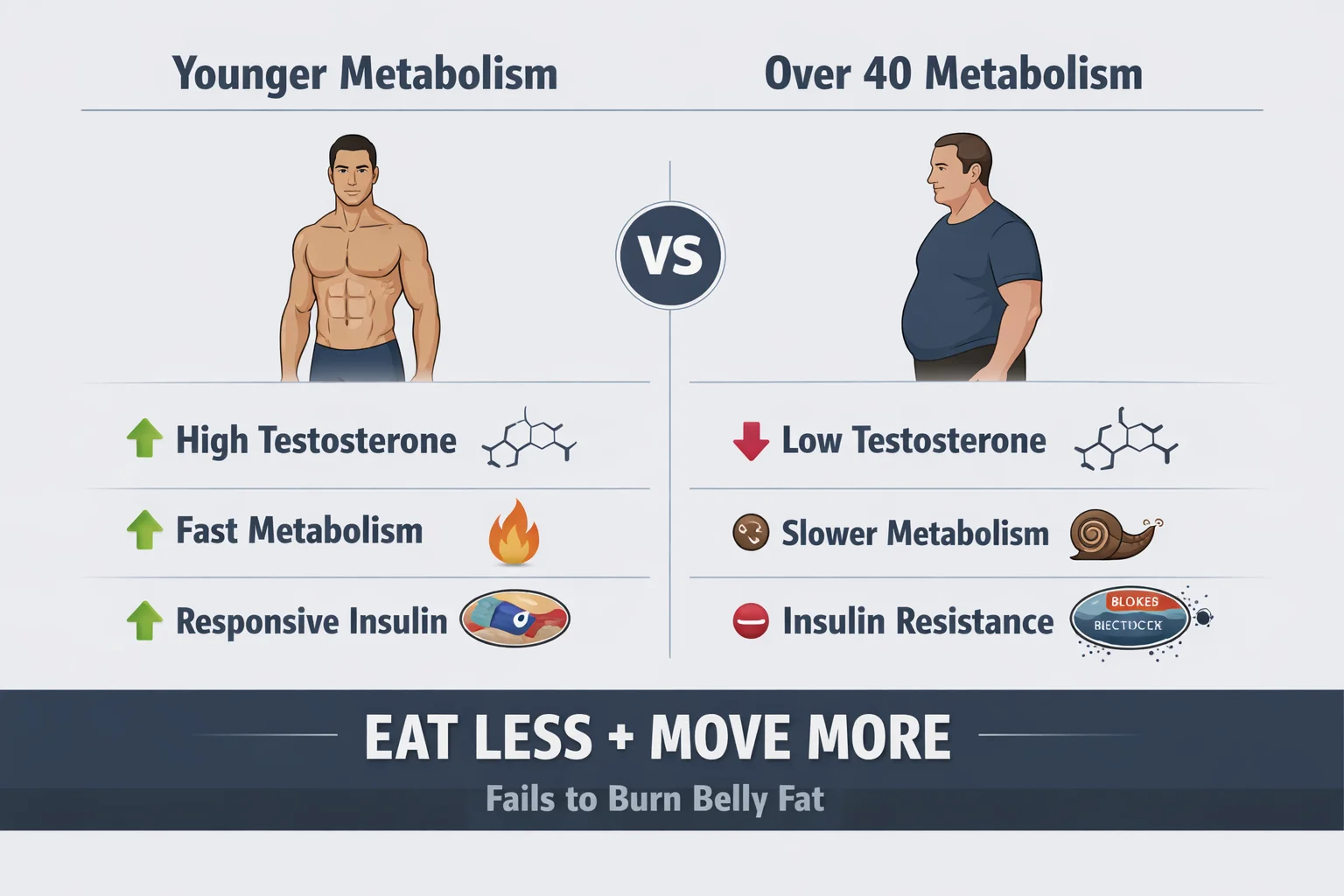
The lie isn’t complicated. It sounds like this: “Eat less and move more. Do more cardio. Cut the calories. Hit the abs. Stay consistent.”
It’s not that this advice is completely wrong. Calories do matter. Movement does matter. Consistency matters enormously. But this advice is catastrophically incomplete for men over 40, and following it to the letter without understanding what’s actually happening in your body is why so many men in their forties and fifties are grinding away with little to show for it.
The fitness industry, for the most part, wasn’t built for you. It was built around the physiology of men in their twenties: men with high testosterone, fast recovery, responsive metabolisms, and a relatively uncomplicated hormonal landscape. The supplement ads, the workout programs, the “six-pack in twelve weeks” promises. Nearly all of it was designed and tested on a body that doesn’t reflect yours.
So when you follow that advice and it doesn’t work, the implied message is that you failed. That you didn’t try hard enough. That you need to cut more, run more, push harder. And so you do. And still the belly doesn’t move. Sometimes it grows.
Here’s why:
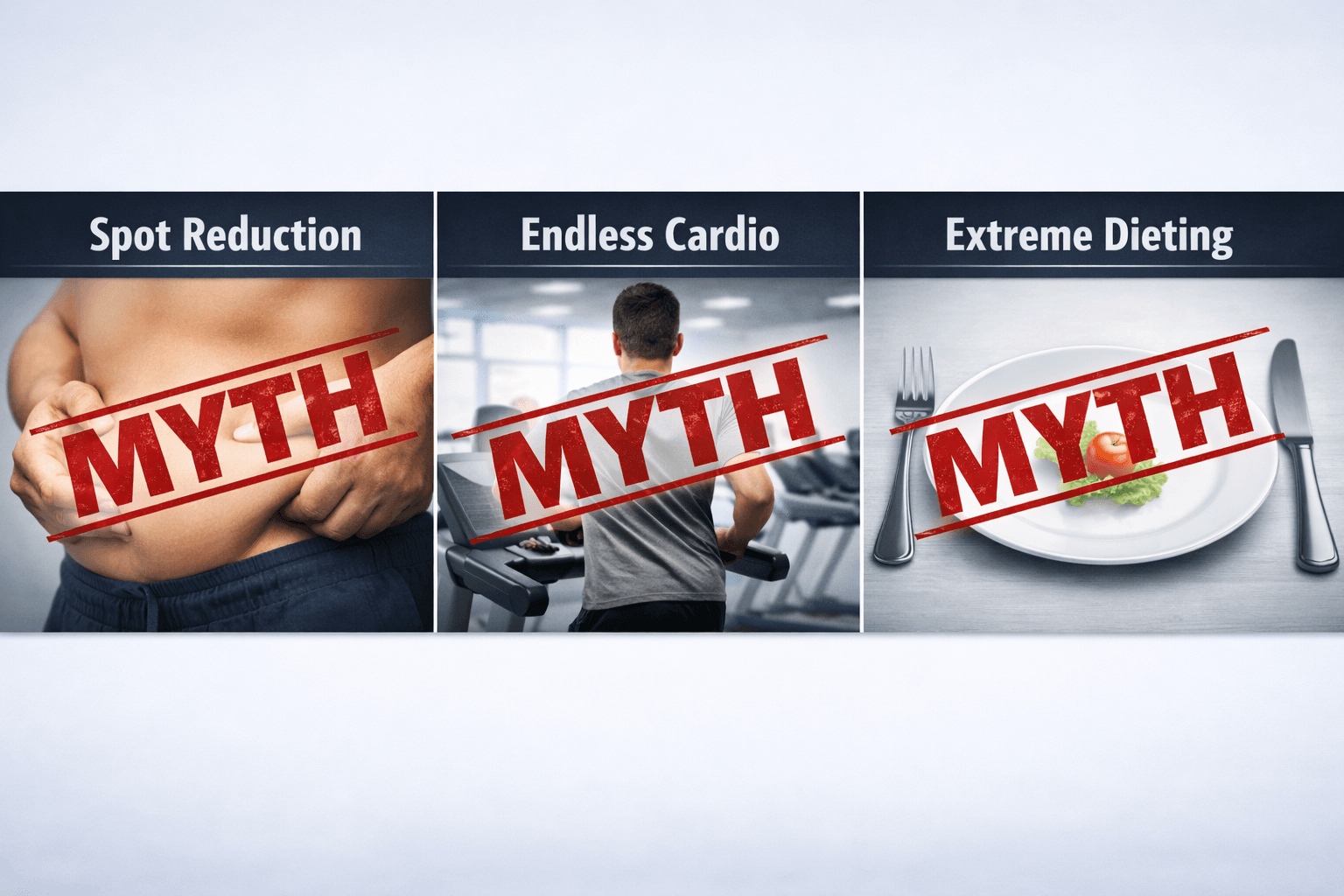
Spot reduction is a myth. Doing crunches and sit-ups will build abdominal muscle, but they don’t selectively burn the fat sitting on top of those muscles. No exercise burns fat from a specific body part on command. Fat loss is systemic. It happens across the whole body based on your overall energy balance and hormonal environment. No amount of ab work will outrun that biology.
Excessive cardio can actively work against you. Hours of steady-state cardio, meaning long runs or long cycling sessions done daily, raises your cortisol levels. Cortisol is your primary stress hormone and as you’ll see in the next section, cortisol has a direct and significant relationship with belly fat storage. The more chronically elevated your cortisol, the more your body essentially stores fat in your midsection. Men who double down on cardio when the belly doesn’t shift are often, unknowingly, making the problem worse.
Severe calorie restriction backfires. Dropping calories aggressively, particularly without prioritizing protein, accelerates muscle loss. Less muscle means a lower resting metabolic rate. A lower resting metabolic rate means your body burns fewer calories at rest. And less muscle combined with the hormonal shifts of your forties means your testosterone is taking yet another hit. You lose the very tissue that makes fat loss sustainable.
None of this means you should stop trying. It means you need a different approach, one that actually accounts for your biology.
What Actually Changes in Your Body After 40 (That Nobody Talks About)
This is the section most fitness articles skip or skim. Understanding the biology isn’t just interesting. It’s the difference between fighting your body and working with it. Let’s break down what’s actually happening.
The Testosterone Decline Nobody Warns You About
Testosterone begins declining gradually around age 30 to 35, dropping roughly 1 to 2 percent per year. By the time a man reaches 50, he may have lost anywhere from 20 to 30 percent of his peak testosterone production. Most men don’t notice this as a sudden shift. It’s gradual, subtle, and often attributed to stress or getting older rather than a measurable hormonal change.
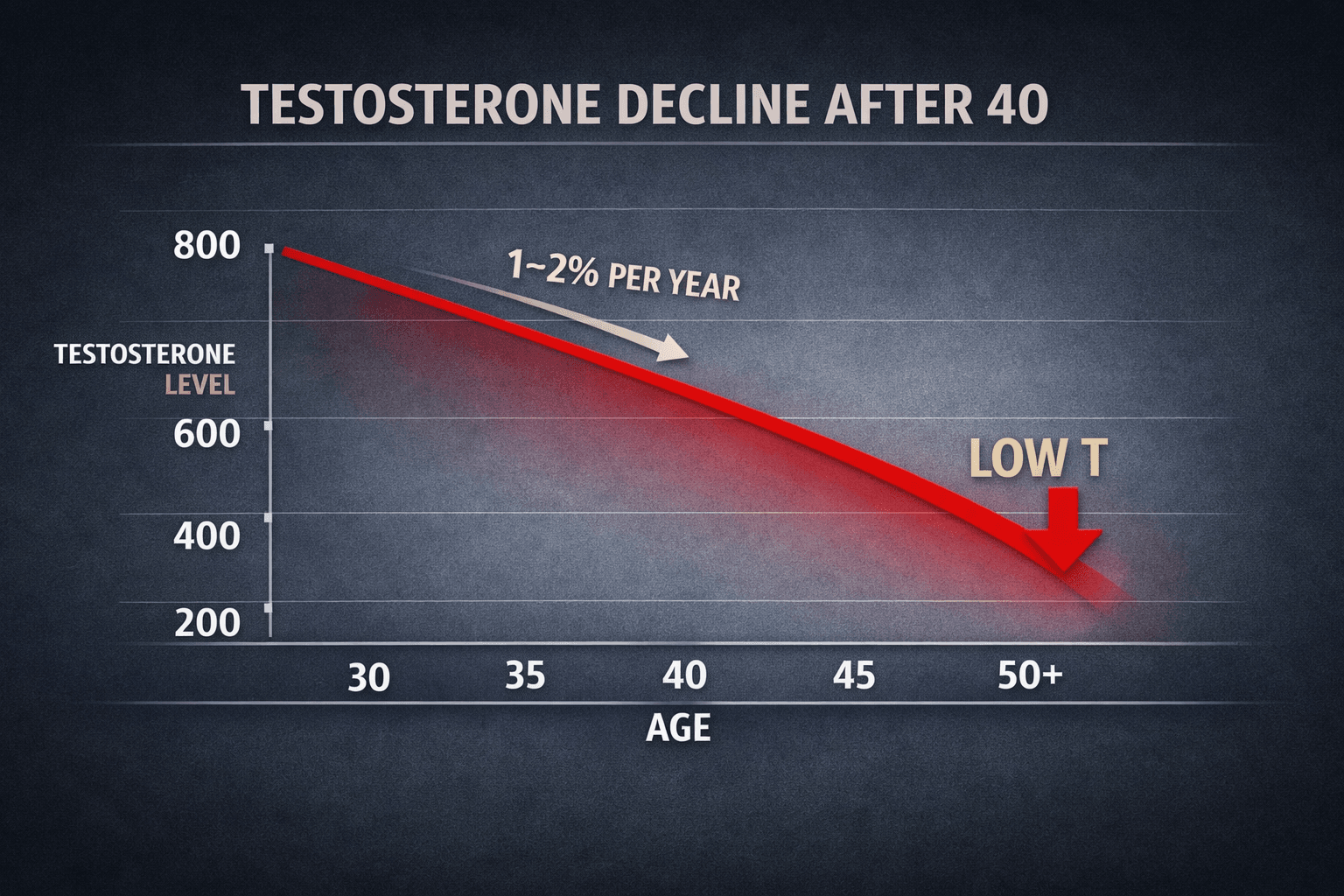
Men lose 1–2% of their testosterone every year after 40, and the effects compound.
What matters for belly fat is what low testosterone actually does to your body’s composition and metabolism. Testosterone plays a critical role in building and maintaining muscle mass. When it declines, you lose muscle more easily, and because muscle is metabolically active tissue, its loss directly reduces how many calories your body burns at rest. Testosterone also improves insulin sensitivity, meaning it helps your cells use glucose efficiently rather than storing it as fat. As testosterone drops, insulin sensitivity often drops with it. The result is a body that is progressively more efficient at storing fat and less efficient at burning it.
This isn’t dramatic or sudden. It’s a slow drift in the wrong direction, and it explains why many men find that the lifestyle that kept them lean in their thirties stops working in their forties without any obvious change on their part.
The Fat-Hormone Feedback Loop: The Vicious Cycle
Here’s where things get particularly important to understand, and where most articles fall completely short.
Belly fat is not passive storage. It is metabolically active tissue, and it produces an enzyme called aromatase. Aromatase is an enzyme that turns testosterone into estrogen. The more belly fat you have, the more aromatase your body makes, which means more testosterone gets converted. This leaves less testosterone to help build muscle, keep your metabolism running smoothly, and manage fat storage.
The cycle looks like this:
And so it continues…
This bidirectional relationship between testosterone and body fat is well established in research. A 2022 study published in Scientific Reports involving over 1,400 subjects found a significant inverse association between testosterone levels and visceral fat area, independent of age and other metabolic factors. (Read the study on PubMed) A separate analysis in Obesity Reviews confirmed that low testosterone predicts progressive fat gain in men, while excess fat simultaneously suppresses further testosterone production, creating a self-reinforcing hormonal cycle.
This is not a character flaw. It is a hormonal state. And although it sounds very complex, you can change your hormonal state with the right information and approach.
Visceral Fat vs. Subcutaneous Fat: Why This Distinction Matters
Not all belly fat is the same, and the distinction matters a great deal both for your health and for how you approach losing it.
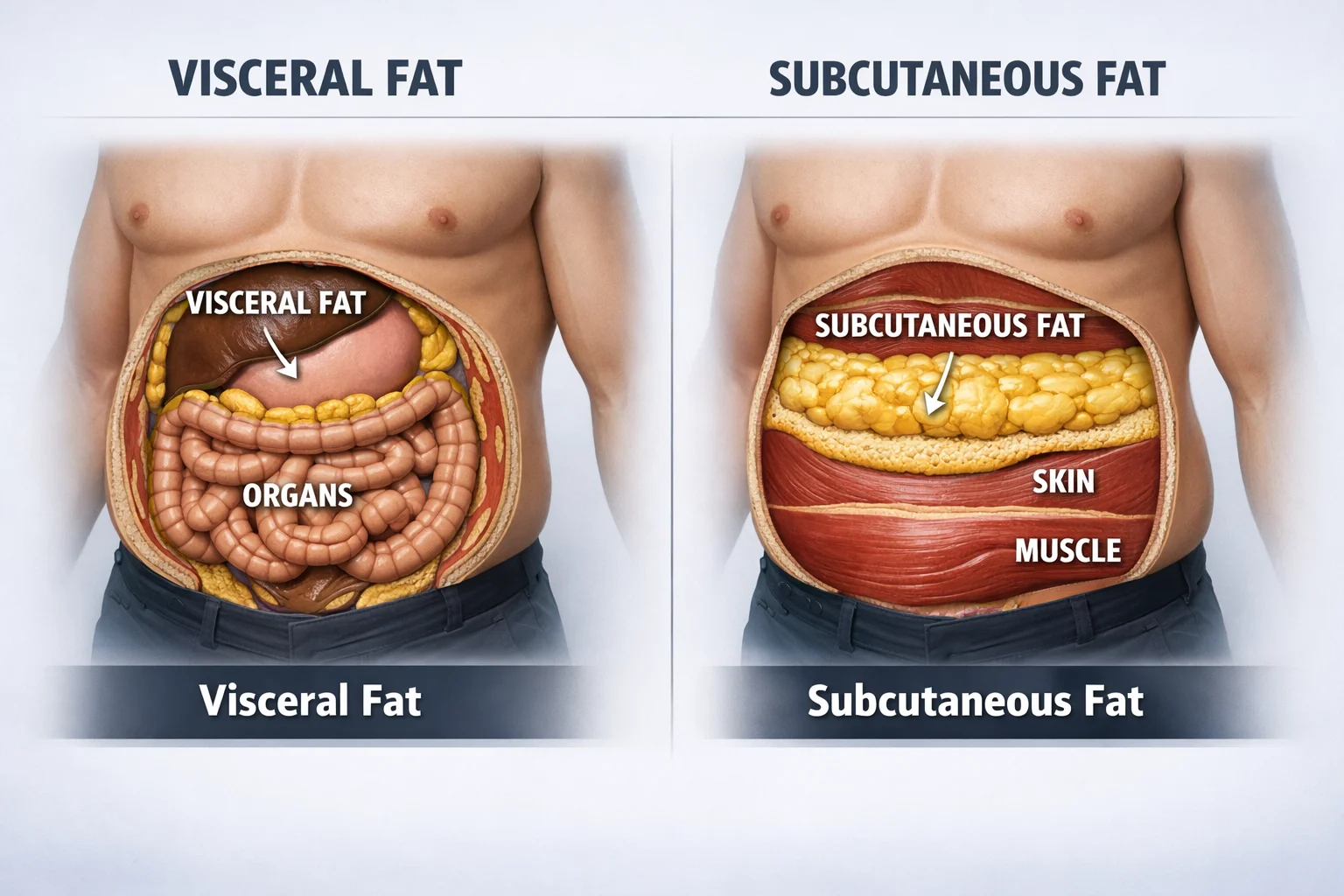
Visceral Fat vs. Subcutaneous Fat Comparison Table
Category | Visceral Fat | Subcutaneous Fat |
|---|---|---|
Location | Deep inside the abdominal cavity, surrounding organs | Sits directly under the skin, most commonly around the waist, hips, and thighs |
Appearance/Feel | Not always visible; creates a “hard belly” or firm midsection | Softer, pinchable fat just beneath the skin |
Health Risk | High risk: strongly linked to insulin resistance, inflammation, metabolic disease, and cardiovascular issues | Lower risk: primarily cosmetic unless present in extreme amounts |
Hormonal Impact | Disrupts testosterone, increases cortisol, worsens insulin sensitivity | Minimal hormonal disruption compared to visceral fat |
Response to Lifestyle Changes | Responds well to strength training, protein‑forward nutrition, sleep optimization, and stress reduction | Reduces more slowly; often the last fat to drop during weight loss |
Subcutaneous fat is the soft fat you can pinch, the layer that sits just beneath the skin. It’s cosmetically frustrating, but it’s relatively benign from a health perspective.
Visceral fat is different. It sits deep in the abdominal cavity, surrounding your organs: the liver, pancreas, and intestines. You can’t pinch it. It’s often what gives a belly that harder, more solid appearance rather than a softer, flabbier one. And unlike subcutaneous fat, visceral fat is highly metabolically active. It produces inflammatory compounds called cytokines, interferes with insulin signaling, disrupts liver function, and critically, produces that aromatase enzyme that feeds the testosterone-suppression loop described above.
Carrying excess visceral fat is associated with significantly elevated risk of type 2 diabetes, cardiovascular disease, and metabolic syndrome. The Mayo Clinic notes that a waist circumference above 40 inches in men is a clinically meaningful marker of excess visceral fat and associated metabolic risk. (See Mayo Clinic guidance on belly fat) Research has also linked abdominal visceral fat in middle-aged adults to Alzheimer’s-related brain changes, including beta-amyloid buildup, as reported in a 2025 analysis of middle-aged adults with abdominal obesity.
The silver lining: visceral fat is often the first to respond to lifestyle changes. While subcutaneous fat can be stubborn and slow to shift, visceral fat tends to mobilize relatively quickly when you address the right variables. Men who implement the protocol in this article frequently notice their waist circumference shrinking and their clothes fitting differently before the scale shows significant movement.
Cortisol: The Stress Hormone That’s Filling Your Belly
This is the factor that almost never gets covered in “how to lose belly fat” articles, and it may be the most important for the typical man over 40.
Cortisol is your body’s primary stress response hormone. It’s not inherently bad. Short-term cortisol release is normal and functional. The problem is chronic, sustained elevation of cortisol, which is increasingly common for men navigating careers, families, financial pressures, and the general intensity of midlife.
Here’s the critical piece of biology: visceral fat cells have a significantly higher density of cortisol receptors than any other type of fat tissue in the body. When cortisol binds to these receptors, it directly signals fat storage in the midsection. Men under chronic stress, even men who eat well and train consistently, can develop and maintain significant belly fat because their cortisol environment is telling the body to hold onto it.

This also explains a phenomenon that puzzles many men: developing a belly without obviously overeating. You don’t have to be eating poorly to accumulate visceral fat if your stress hormones are chronically elevated. The fat goes there because your body is receiving a sustained biological signal to put it there.
Cortisol also suppresses testosterone, worsens sleep quality, disrupts insulin function, and increases appetite, particularly for high-calorie, high-sugar foods. Managing stress isn’t a soft lifestyle recommendation. For men over 40, it is a core fat-loss strategy.
Insulin Resistance: The Silent Driver
As testosterone declines, the muscle cells that normally absorb glucose efficiently become less responsive to insulin. This is early-stage insulin resistance, and it’s far more common in men over 40 than most realize, and far more relevant to belly fat than most fitness advice acknowledges.
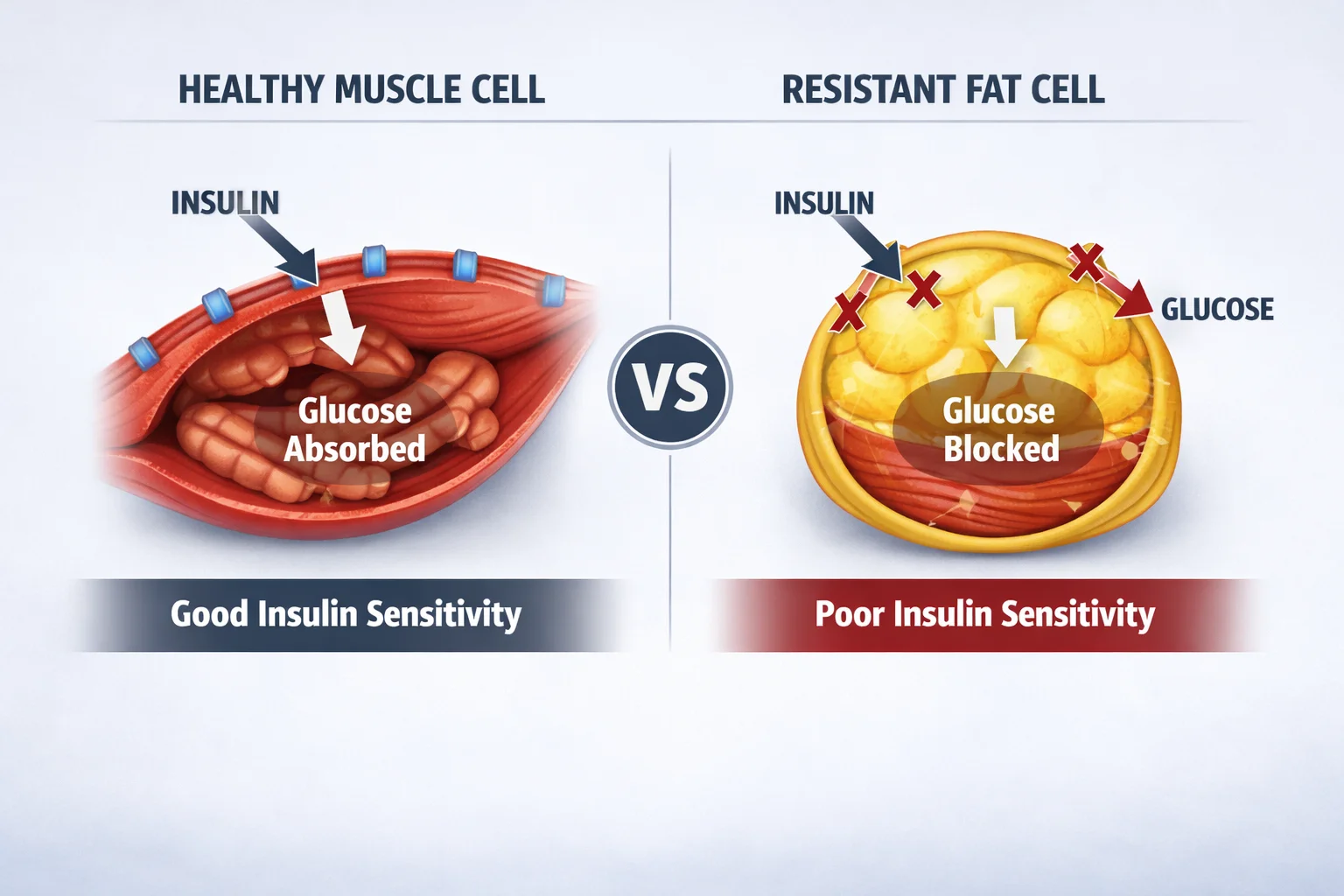
When your muscles don’t readily absorb glucose, your body defaults to storing more of it as fat. Add the poor sleep that many men in their forties experience, which independently worsens insulin sensitivity, and you have a situation where the same meal that your body handled efficiently at 30 is now being partially routed to fat storage at 45.
This isn’t permanent. Strength training, in particular, can significantly boost insulin sensitivity. Cutting back on sugar and refined carbs, getting better sleep, and managing stress help too. The catch is, you first have to realize it’s a factor – something most men don’t know because no one ever told them.
Ready to start your second peak?
No spam. Unsubscribe anytime.
How to Actually Lose Belly Fat After 40: A Protocol Built for Your Body
This isn’t a twelve-week transformation program. There’s no magic number of weeks at the end of which you’ll have abs. What follows is a sustainable reset, a set of inputs that work with your biology rather than against it. When implemented consistently, they shift your hormonal state, reduce visceral fat, and produce changes that last.

Step 1: Fix the Hormonal Environment First
Everything else in this protocol works better when the foundational hormonal variables are addressed. This step isn’t glamorous, but it is the most important.
Prioritize sleep. Seven to nine hours of quality sleep per night is not a luxury. It is a hormonal necessity. One night of poor sleep meaningfully raises cortisol, reduces testosterone, worsens insulin sensitivity, and disrupts the hunger hormones ghrelin and leptin, making you hungrier the next day while simultaneously reducing your ability to feel full. If you’re cutting sleep to make time for early morning workouts, you are trading one important variable for a less important one.
Consistency matters as much as duration. A consistent sleep and wake time, even on weekends, regulates your circadian rhythm and significantly improves sleep quality over time. If your sleep is poor, fixing it before anything else is not an exaggeration.
Manage chronic stress deliberately. This doesn’t mean eliminating stress, which is neither realistic nor necessary. It means building specific practices into your day that actively lower cortisol. Daily low-intensity movement, particularly walking, is one of the most effective cortisol regulators available. A ten-to-thirty-minute walk, especially outdoors, demonstrably reduces cortisol and supports recovery. A short decompression ritual between work and the rest of your evening, such as a walk, ten minutes of quiet, or a few minutes of deliberate breathing, can interrupt the chronic cortisol cycle that builds over a workday.
Limit alcohol. Alcohol suppresses testosterone, activates aromatase, disrupts sleep architecture, and adds empty calories that are disproportionately stored as fat. Even moderate drinking at two to three drinks per night meaningfully impacts your hormonal environment over time. This doesn’t require total abstinence, but it does require honest accounting.
Get baseline bloodwork. You cannot optimize what you don’t measure. A basic panel covering total and free testosterone, cortisol, fasting insulin, thyroid function (TSH, free T3, free T4), and a full metabolic panel gives you actual data rather than guesswork. Many men are operating with meaningful hormonal imbalances they aren’t aware of. Baseline bloodwork is the most useful information you can have when starting this process.
Step 2: Eat in a Way That Supports Your Hormones
The goal here is not a dramatic calorie restriction. It’s a nutritional approach that creates a moderate deficit while actively supporting hormonal health.
Create a moderate calorie deficit. An aggressive deficit of cutting by 1,000 calories per day or more accelerates muscle loss, suppresses testosterone, and eventually slows your metabolism through adaptive thermogenesis. A deficit of 300 to 500 calories below your daily maintenance is enough to drive consistent fat loss without triggering these counterproductive responses. Losing half a pound to one pound per week is the target. Slower than a crash diet, yes, and dramatically more sustainable and hormonally friendly.
Protein is non-negotiable. Aim for 0.8 to 1 gram of protein per pound of bodyweight per day. This is the single most important nutritional variable for men over 40 trying to lose fat. Adequate protein preserves muscle mass during a calorie deficit, increases satiety by raising levels of the hunger-regulating hormone peptide YY, and has a higher thermic effect than carbohydrates or fat, meaning your body burns more calories just digesting it. If you’re currently eating 80 to 100 grams of protein per day, doubling that will likely be the highest-impact nutritional change you can make.
Be strategic with carbohydrates, not afraid of them. Eliminating carbohydrates entirely is not necessary and for many men is counterproductive, as low-carb diets can suppress thyroid function and raise cortisol in men who are training hard. Instead, time your carbohydrates intentionally. Eating carbohydrates around your workouts, before for energy and after for recovery, improves insulin sensitivity and supports muscle recovery without excess fat storage. Outside of training windows, emphasize protein, vegetables, and healthy fats.
Eat foods that support testosterone and reduce aromatase. Cruciferous vegetables, including broccoli, Brussels sprouts, cauliflower, and kale, contain compounds called indole-3-carbinol and DIM that help the body metabolize estrogen more efficiently, reducing the estrogenic load that suppresses testosterone. Zinc-rich foods such as beef, oysters, and pumpkin seeds are essential for testosterone production, and zinc deficiency is directly associated with low testosterone. Healthy fats from sources like avocado, olive oil, and whole eggs provide cholesterol, which is a direct precursor to testosterone synthesis. These aren’t superfoods and they’re not magic, but they’re nutritionally aligned with your hormonal goals.
Limit or eliminate the obvious disruptors. Ultra-processed foods, excess sugar, refined carbohydrates, and alcohol are all worth reducing or removing, not because of some arbitrary dietary dogma, but because each of them specifically undermines the hormonal environment you’re trying to build.
The solution isn’t eating less – it’s restoring the system that burns fat in the first place.
Step 3: Strength Train With Purpose, 2 to 4 Times Per Week
If there is a single most important training variable for men over 40 trying to lose belly fat, it is strength training, specifically progressive resistance training using compound movements.
Here’s why it matters more than cardio for this goal: strength training builds and preserves muscle mass, which raises your resting metabolic rate, the number of calories your body burns while doing nothing. It directly improves insulin sensitivity, reducing the glucose-to-fat conversion that’s contributing to visceral fat accumulation. And heavy compound training produces a meaningful acute testosterone response, temporarily raising testosterone levels post-workout.
The key is compound movements, meaning exercises that recruit multiple large muscle groups simultaneously. Squats, deadlifts, Romanian deadlifts, barbell or dumbbell rows, bench press, overhead press, and hip hinges are your primary tools. These movements produce far greater hormonal responses and caloric expenditure than isolation exercises or machine-based training.
Progressive overload, which means gradually increasing the weight or difficulty over time, is more important than volume. Getting stronger over weeks and months is the signal your body needs to maintain and build muscle. Three full-body sessions per week, built around two to three compound movements each, is an effective and time-efficient structure for busy men.
One specific note: do not skip leg training. Lower body compound movements including squats, deadlifts, and leg press involve the largest muscle groups in the body and produce the strongest hormonal response. Many men over 40 focus on upper body training and deprioritize legs. That’s a significant missed opportunity.
Step 4: Add Strategic Cardio, Not Endless Cardio
Cardio has a role. It’s just not the role most men over 40 are playing it in.
Daily walking is the foundation. Thirty to forty-five minutes of walking per day, ideally outdoors, does several things simultaneously: it lowers cortisol, supports fat oxidation at a pace that doesn’t spike stress hormones, aids recovery between strength sessions, and accumulates meaningful caloric expenditure over time without the cortisol load of intense daily cardio. Many men find that simply adding a daily walk, especially one after dinner, produces visible changes over weeks.
One to two HIIT sessions per week. High-intensity interval training, done briefly and infrequently, improves insulin sensitivity, elevates fat oxidation, and produces post-exercise caloric burn without the chronic cortisol elevation of daily moderate-intensity cardio. A session might look like a ten-minute warm-up followed by four to six rounds of thirty to forty-five seconds of hard effort on a rower, bike, or with kettlebell swings, followed by ninety seconds of recovery. Done twice a week alongside your strength training, this is highly effective. Done daily, it becomes a cortisol trap.
What to stop doing. If you’ve been running five or six days a week or doing an hour of cardio daily trying to out-exercise the belly, stop. Replace it with the framework above: strength training three times, HIIT once or twice, walking every day. You’ll likely see better results doing less, but doing the right things.
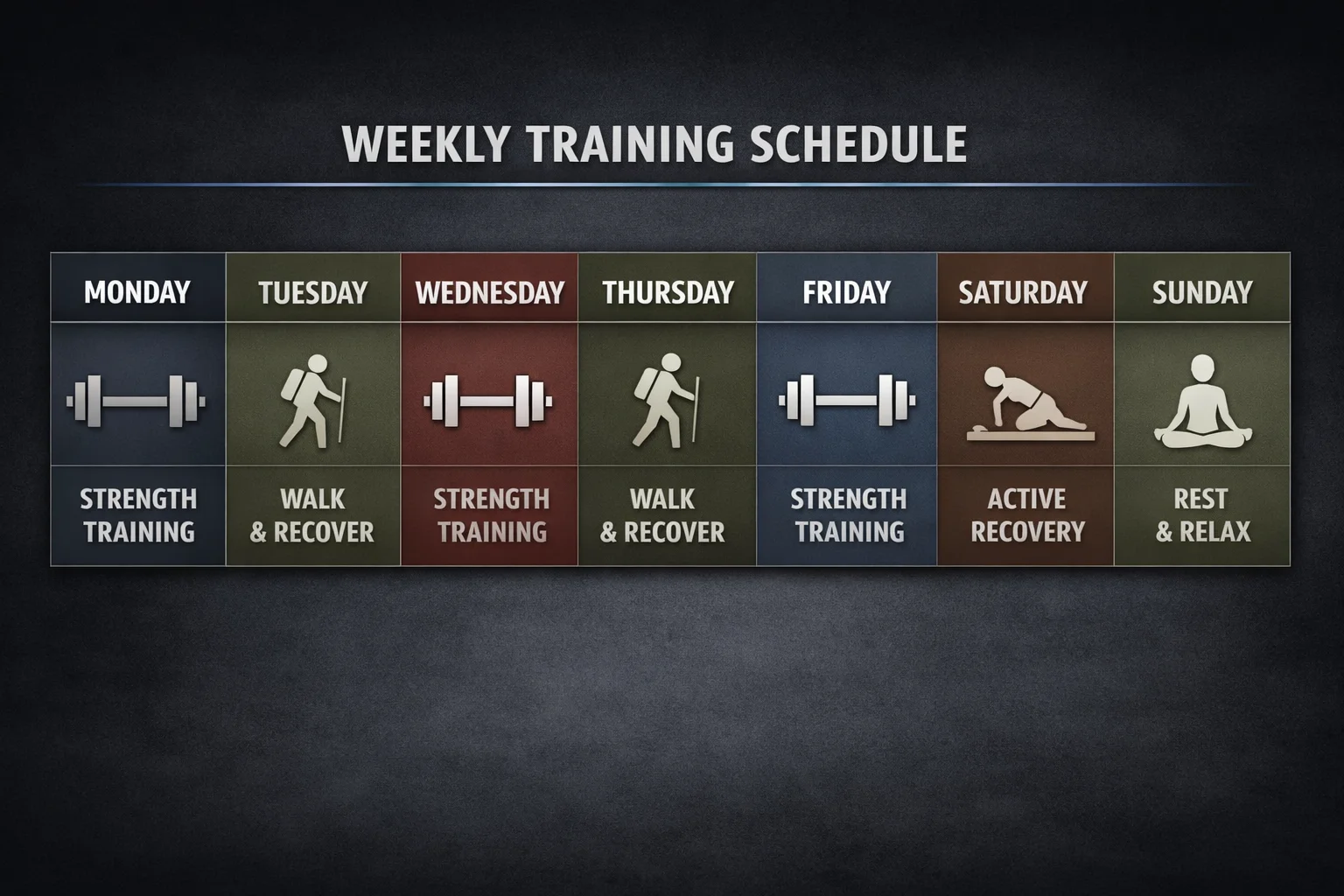
Weekly Training Schedule Overview
Day | Training Focus | Notes |
|---|---|---|
Monday | Strength – Full Body | 45-60 minutes |
Tuesday | Walk | 30-45 minutes |
Wednesday | Strength + HIIT | Strength: 45-60 minutes |
Thursday | Walk + Active Recovery | Walk: 30-45 minutes |
Friday | Strength – Full Body | 45-60 minutes |
Saturday | Walk | 30-45 minutes |
Sunday | Rest / Active Recovery | Light mobility or stretching |
Step 5: Recover Like Your Results Depend On It, Because They Do
Recovery is the variable most men over 40 most dramatically underestimate. In your twenties, you could train hard, sleep six hours, and bounce back. After 40, that math no longer works. The training session is the stimulus. Recovery is where adaptation, including fat loss, actually happens.
Sleep, as already covered, is the cornerstone of recovery. But there are additional practices worth building in. Active recovery on rest days, such as walking, light mobility work, or stretching, promotes blood flow and muscle repair without adding stress to the system. Paying attention to subjective recovery markers including your energy, your mood, and your motivation to train gives you real-time information about whether you’re recovering adequately.
If you’re training hard four to five days per week but consistently sleeping five to six hours, you are working against yourself at a fundamental level. No training program, however well designed, can override chronic sleep deprivation. Recovery is not optional. It’s where the work pays off.
How Long Does It Actually Take to Lose Belly Fat After 40?
This is the question that determines whether most men stick with a protocol or abandon it, and the honest answer is often misaligned with what people expect.
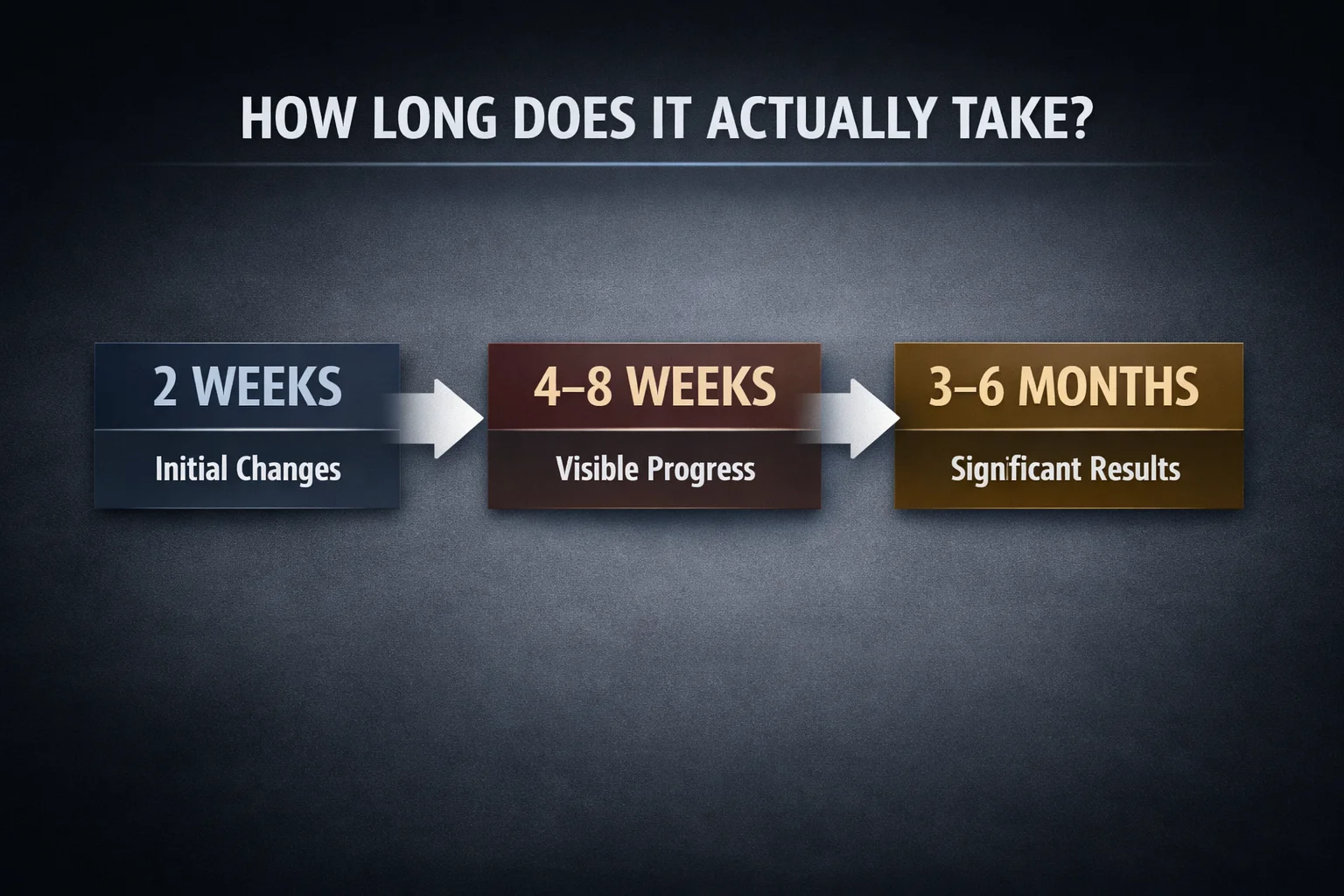
Most men notice initial changes within the first two weeks. These are primarily reductions in bloating and water retention as processed food, alcohol, and excess carbohydrates are reduced. Pants feel slightly looser. Energy starts to improve. Sleep may begin to improve. These are real, meaningful changes, even if the scale barely moves.
Between weeks four and eight, with consistent training and nutrition, clothing fit begins to change more noticeably. Strength in the gym increases. Sleep quality continues to improve. Some men begin to see waist circumference decrease measurably during this phase.
Visible changes in body composition, the ones you can see in a mirror, typically become apparent between months three and six. This is also the window in which the hormonal environment has had time to meaningfully shift. Testosterone levels begin to respond to improved sleep, stress management, strength training, and alcohol reduction. As the hormonal environment improves, fat loss tends to accelerate and become more self-sustaining.
This is not slow progress. This is sustainable progress, the kind that sticks.
Men who crash diet and add extreme cardio often see faster initial scale movement, but they also lose muscle, suppress their metabolism, and rebuild the hormonal conditions that created the belly in the first place. Within months, the weight comes back, and often with interest.
Track waist circumference, not just scale weight. Because strength training builds muscle while you’re simultaneously losing fat, the scale often underrepresents your real progress. A tape measure around the narrowest point of your waist, measured weekly at the same time of day, will give you a far more accurate picture of what’s actually happening and will show progress sooner and more reliably than your weight alone.
What’s Keeping Most Men Stuck
Understanding the right protocol is one thing. Actually implementing it is another. These are the most common failure points and how to get past them.
Doing too much too fast. Going from largely sedentary to training six days a week in the first two weeks is a recipe for injury, burnout, or both. It also massively spikes cortisol, exactly what you’re trying to avoid. Start with three strength sessions and daily walks. Add from there once the foundation is established.
Under-eating protein. This is the most common and most impactful nutritional error for men over 40. Most men are eating far less protein than they think, often 60 to 80 grams per day when 160 to 200 grams would serve them dramatically better. Track your protein for two weeks. The number is almost certainly lower than it should be, and raising it is one of the highest-leverage changes you can make.
Sacrificing sleep for training time. This is well-intentioned and completely counterproductive. Getting up at 4:30 AM to train while sleeping five hours is trading a critical recovery resource for a fitness stimulus that can’t be properly absorbed without adequate recovery. Protect sleep first. Find training time that doesn’t come at the expense of it.
Relying solely on the scale. Because muscle weighs more than fat, men who are strength training and losing fat simultaneously often see misleading scale numbers. Body composition can improve dramatically, with visceral fat dropping and muscle increasing, while the scale shows minimal change. Men who judge progress only by weight frequently quit programs that are actually working. Use waist circumference, clothing fit, strength numbers, and energy levels as your primary progress markers.
No system, just willpower. Willpower is finite and unreliable. It erodes under stress, poor sleep, and busy schedules, exactly the conditions that characterize most men’s lives after 40. Systems, including consistent sleep times, pre-planned meals, a fixed training schedule, and a daily walk that is non-negotiable, outlast willpower every time. Build the structure first, and let it carry you when motivation is low.
Should You Consider Testosterone Replacement Therapy?
TRT is a topic that comes up in nearly every conversation about men’s health after 40, and it deserves a clear-headed, honest answer rather than either dismissal or uncritical enthusiasm.
Testosterone replacement therapy can be clinically appropriate and genuinely beneficial for men who have confirmed hypogonadism, meaning clinically low testosterone levels verified by bloodwork and associated with meaningful symptoms. If your total testosterone is consistently below 300 ng/dL and accompanied by symptoms like persistent fatigue, depression, loss of libido, and significant muscle loss despite appropriate training and nutrition, TRT is a conversation worth having with a knowledgeable physician. The Mayo Clinic provides a useful overview of low testosterone symptoms and evaluation criteria as a starting point for that conversation. (View Mayo Clinic overview of low testosterone)
However, the majority of men over 40 who feel like they have “low T” have not yet optimized the lifestyle variables that directly govern testosterone production. Sleep deprivation, chronic stress, excess alcohol, poor nutrition, physical inactivity, and excess body fat, particularly visceral fat, all suppress testosterone, often substantially. These are addressable without exogenous hormones.
At Revivo40, the position is straightforward: optimize the natural levers first, consistently, for at least six to twelve months. That means sleep, training, nutrition, stress management, and alcohol reduction, the exact protocol outlined in this article. Many men who do this work find that their symptoms resolve significantly, their energy and libido return, and their body composition improves without pharmaceutical intervention.
If you’ve genuinely done that work, not just dabbled in it, but committed to it, and you’re still struggling, then it’s time to get bloodwork done and have an informed conversation with a doctor who specializes in men’s hormonal health. Bloodwork is always step one, regardless of your decision about TRT. You cannot make an informed decision without data.
What TRT is not: a shortcut that bypasses the need for the foundational work. Testosterone therapy without addressing sleep, nutrition, training, and stress will produce suboptimal results and leave the root causes intact.
This Is Your Reset, Not a Quick Fix
After 40, your body has changed. That’s not a problem to fight. It’s a reality to understand and work with. The men who successfully lose belly fat after 40 and keep it off are not doing extreme things. They’re not running themselves into the ground or surviving on 1,500 calories. They’re doing the right things, consistently, with an understanding of how their body actually works at this stage of life.
The framework is not complicated. Sleep seven to nine hours, consistently. Eat enough protein. Strength train with compound movements two to four times per week. Walk every day. Manage your stress actively rather than just enduring it. Limit alcohol. Measure what matters.
That’s it. Not glamorous. Not a dramatic reinvention. A sustainable reset that shifts your hormonal environment and lets your body do what it’s designed to do.
You’re not broken. You haven’t failed. You were handed a playbook that wasn’t written for you, and now you have one that is.
The only question is whether you’re ready to use it.
Feel Strong, Focused, and Energized Again
Start your journey with simple, science‑backed steps designed specifically for men over 40. No fluff. No gimmicks. Just results.
No pressure. Just clear, practical guidance to help you move forward.
FAQs (Frequently Asked Questions)
Why is it so hard to lose belly fat after 40 for men?
After 40, testosterone declines at roughly 1 to 2 percent per year, cortisol tends to be chronically elevated due to life demands, and insulin sensitivity decreases as muscle mass drops. These three factors together create a hormonal environment that actively favors abdominal fat storage, particularly visceral fat around the organs. This is not a motivation or discipline problem. It is a biological shift that requires a different approach than the generic “eat less, move more” advice designed for a younger male body.
How long does it take to lose belly fat after 40?
Most men notice initial changes, including reduced bloating, better energy, and slight clothing changes, within the first two weeks. Measurable changes in waist circumference typically appear between weeks four and eight. Visible body composition changes and meaningful hormonal shifts generally occur over three to six months of consistent effort. Tracking waist circumference gives a more accurate picture of progress than scale weight, because muscle gain can mask fat loss on the scale.
Does testosterone affect belly fat in men?
Significantly and directly. Low testosterone reduces muscle mass and metabolic rate, which promotes fat storage. Belly fat itself makes this worse by producing aromatase, an enzyme that converts remaining testosterone into estrogen. This creates a reinforcing cycle: low testosterone leads to more fat, and more fat suppresses more testosterone. Addressing the hormonal environment through sleep, strength training, nutrition, and stress management is therefore central to any effective belly fat strategy for men over 40. Research published in Scientific Reports confirmed this inverse relationship between testosterone and visceral fat in a large cross-sectional study of over 1,400 men. (View the study)
What exercise is best for losing belly fat after 40?
Strength training with compound movements such as squats, deadlifts, rows, and presses is the most important exercise variable, because it builds muscle, improves insulin sensitivity, and supports testosterone. Daily walking complements this by lowering cortisol and supporting fat oxidation without raising stress hormones. One to two brief HIIT sessions per week round out the approach. Excessive steady-state cardio done daily can raise cortisol and worsen the hormonal conditions driving belly fat storage, making it a counterproductive primary strategy.
Does diet or exercise matter more for losing belly fat after 40?
Both matter, but the foundational variable is often sleep and stress management, because chronically elevated cortisol directly signals visceral fat storage regardless of dietary choices or training. A moderate calorie deficit of 300 to 500 calories below maintenance combined with high protein intake and strength training works synergistically. No dietary approach fully overcomes a severely disrupted hormonal environment, which is why sleep and stress are addressed first in any effective protocol.
What foods help lose belly fat after 40?
Foods that support testosterone and reduce estrogenic load are particularly valuable. Cruciferous vegetables such as broccoli, cauliflower, and Brussels sprouts help metabolize estrogen. Zinc-rich foods including beef, pumpkin seeds, and oysters support testosterone production. Healthy fats from avocado, eggs, and olive oil provide the building blocks for hormone synthesis. High-protein foods preserve muscle during a calorie deficit and improve satiety. Conversely, alcohol, ultra-processed foods, and excess sugar all disrupt the hormonal environment that belly fat loss depends on.
This article is for informational purposes only and does not constitute medical advice. If you have concerns about your hormone levels, metabolic health, or are considering any medical intervention, consult a qualified healthcare provider.
At Revivo40, we believe in science-backed, practical guidance built for men over 40, without gimmicks, shortcuts, or bro-science. If this article resonated with you, explore our guides on hormone optimization, strength training, and sustainable fat loss.
Sources & Further Reading
- Abdelhamed, A. et al. “Testosterone is associated with abdominal body composition derived from computed tomography: a large cross-sectional study.” Scientific Reports, 2022. https://pubmed.ncbi.nlm.nih.gov/36581704/
- Grossmann, M. “Low testosterone in men with type 2 diabetes: significance and treatment.” Journal of Clinical Endocrinology & Metabolism, 2011. Related overview at https://www.ncbi.nlm.nih.gov/pmc/articles/PMC3167132/
- Mayo Clinic. “Belly fat in men: Why weight loss matters.” https://www.mayoclinic.org/diseases-conditions/obesity/expert-answers/belly-fat/faq-20058032
- Mayo Clinic. “Male hypogonadism: Symptoms and causes.” https://www.mayoclinic.org/diseases-conditions/male-hypogonadism/symptoms-causes/syc-20354881
About Terry
Founder of Revivo40
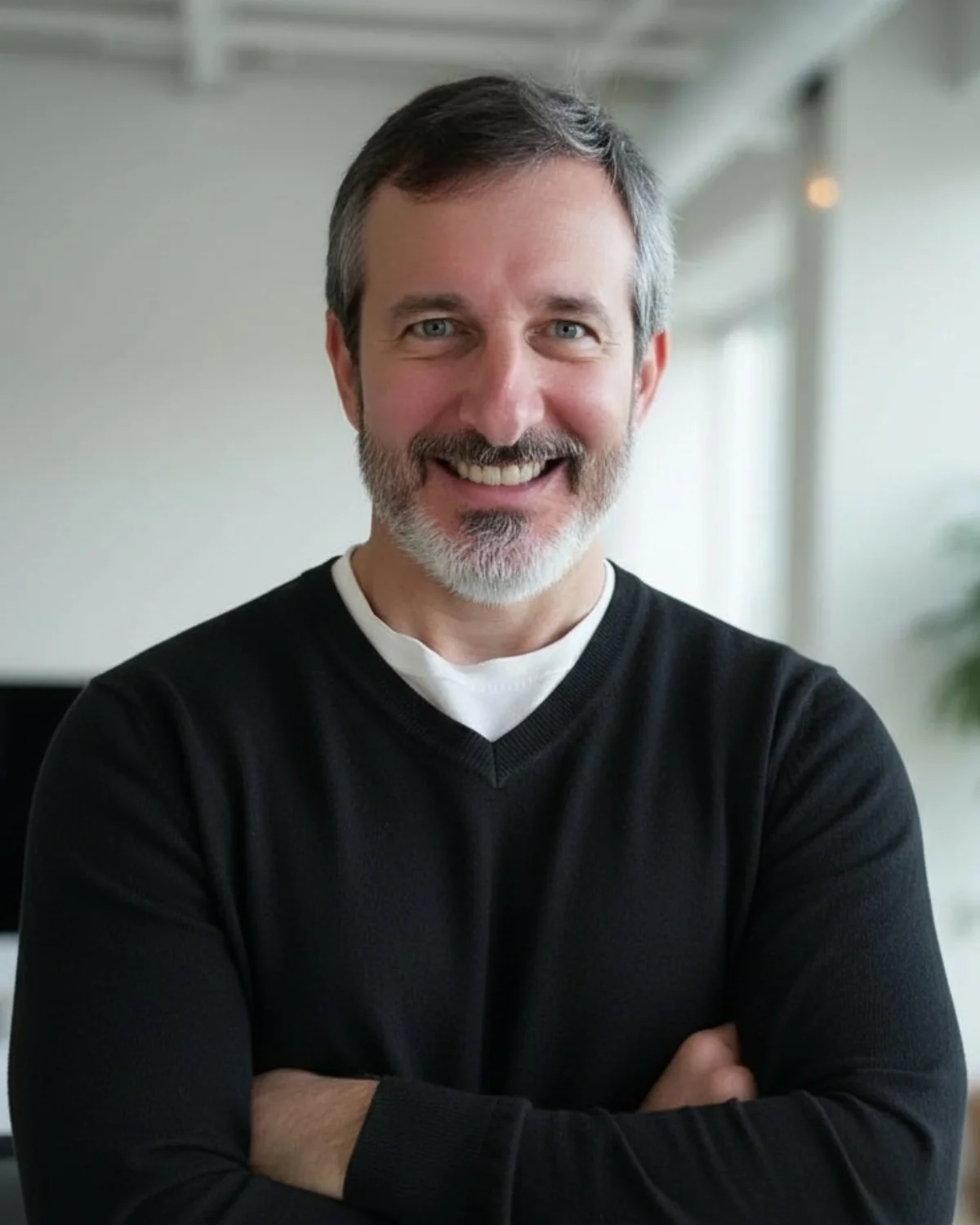
Terry is the founder of Revivo40, a performance brand built for men who want their strength, energy, and confidence back. After hitting his own wall in his 40s, he spent years rebuilding his health through strength training, hormone literacy, and simple, sustainable routines.
Today, he blends real‑world experience with evidence‑informed guidance to help men cut through the noise, take back control of their bodies, and step into their second peak with clarity and confidence. His mission is simple: help men over 40 reclaim their edge and build a stronger, sharper, more energized second half of life.
If you’re ready to rebuild your strength and energy, join the Revivo40 Newsletter for weekly, no‑BS guidance built for men over 40.